Our testing looks at the performance and handling of each hybrid car or EV. But it also considers practicality, safety and how easy the hybrid or EV is to live with.
With a focus on hybrids, plug-in hybrids (PHEVs) and electric vehicles (EVs), we cover a lot of commonly seen new and used vehicles you’ll find in New Zealand car showrooms.
Hybrid and electric motor types
Hybrid cars
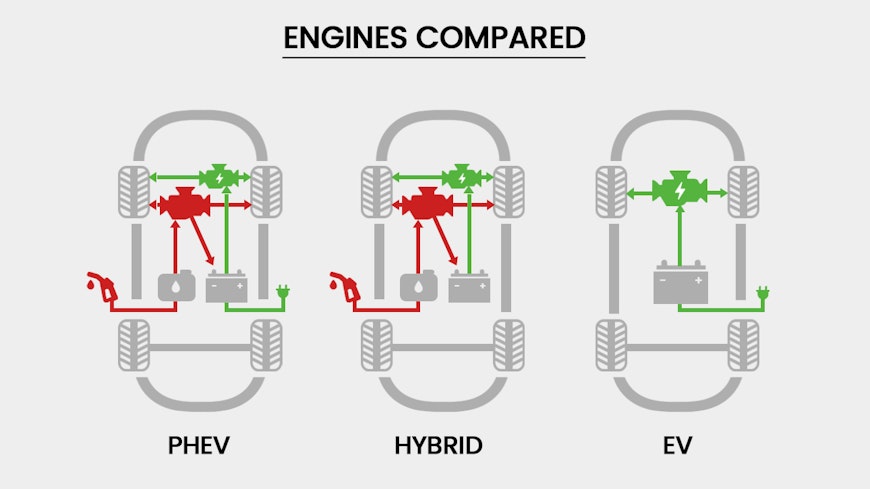
Hybrid cars have a small electric motor and battery that is recharged by the petrol engine and regenerative braking. The most common type, the mild hybrid, has an electric motor that’s powerful enough to drive the car. However, this motor will generally cut out when you approach 50km/h, at which point, the petrol motor takes over.
You don’t need to plug in hybrid cars. They work just like any other petrol car you’ve driven – they’re just more fuel efficient.
Plug-in hybrid cars (PHEVs)
PHEVs are the next step up from hybrid cars. The electric motor and batteries are bigger –we’ve seen PHEVs that claimed an all-electric range of over 90km. The batteries can be recharged by the petrol motor and regenerative braking. However, the bulk of charging is done by plugging the car into the electricity network at home each day. If you can get most of your travel done on the electric motor, you will have some cheap running costs. Just remember that PHEVs have the same servicing requirements as petrol cars.
Electric cars (EVs)
EVs have a large-capacity battery and a large electric motor, or motors. They are nowhere near as complex as hybrid cars and PHEVs as they have fewer moving parts. This reduces their servicing requirements. The main trade-offs are:
less range than petrol- or diesel-powered vehicles
longer waiting time for charging, compared with a quick refuel at a petrol station.
Find the best electric or hybrid car
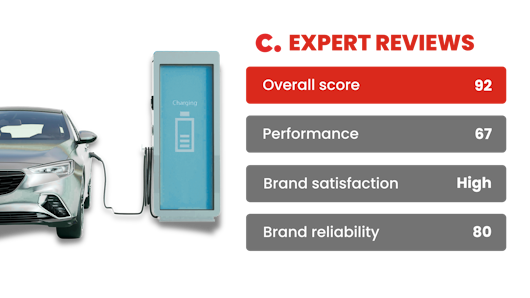
We've independently tested more than 39 models from 22 brands to help you avoid an expensive mistake.
What size hybrid car or EV do you need?
Getting the right size hybrid car or EV is important as going too big or small can be costly, especially with new car depreciation.
Buying a bigger car can give you extra space, but you’ll have to contend with less manoeuvrability and parking restrictions.
The most popular size of hybrid or EV currently is the compact SUV. Its shorter length makes parking easier, but it sits higher off the ground. This gives better visibility and makes the vehicle easier to get in and out of. Plus, hybrid or EV compact SUVs seem to be holding their value. They do come at a premium though. A hatchback hybrid or EV with the equivalent amount of interior space would be much cheaper.
If you regularly cart around passengers, you’ll need something large enough to fit everyone comfortably. If that’s the case, you’ll be looking at a large SUV hybrid, PHEV or EV.
Safety features to look for in a hybrid car or EV
The first thing to look for in a hybrid car or EV is safety features that will help protect people both inside and outside the car. You can find the vehicle’s safety rating at rightcar.co.nz.
The more stars a vehicle has, the safer it is. Features like airbags, traction control and electronic stability control have been around for a long time and are mandatory for all vehicles coming into the country.
Newer features to covet include:
Autonomous emergency braking
This system monitors what’s going on in front of your hybrid car or EV. It constantly measures the distance to the vehicle in front. If that distance rapidly shrinks (because the car in front stops or slows suddenly), the system in your car will apply the brakes if you don’t do so first. This can be a lifesaver in cases where you are momentarily distracted.
Front and rear cross traffic alert
This feature looks out to the sides when you’re reversing or driving forwards out of a park. It warns you if someone’s coming. It comes in very handy, especially when you are surrounded by taller vehicles. Rear cross alerts are reasonably common. Front cross alerts feature on new hybrid and EVs, though you won’t see them on all models.
Lane keep assist
This system keeps your hybrid car or EV in your lane. The best ones gently nudge the steering wheel to keep you in the right place when you’re on the highway. Not all lane keep assist systems are built the same. Some do a really good job of keeping things straight and level – others are an intrusive pain. Be sure to take a car for a test drive to make sure you can work with it.
Other features to look for in a hybrid car or EV
There are a few things to keep an eye on that add to your experience of driving a hybrid or EV and make it easy to live with.
Adaptive cruise control
Adaptive cruise control is one of the most useful car options available. It senses the speed of the vehicles in front and slows or speeds up your car to keep up with the flow of traffic. While you still need to pay attention, this system really reduces the driver’s workload.
Older systems won’t stop vehicles completely and will cut out at a certain threshold, usually around 30km/h. Newer systems can take your hybrid car or EV all the way down to a stop.
360° camera
Front and rear parking sensors are great at giving you some situational awareness, but the 360° camera is the best. This gives you a top-down view of your vehicle and makes parking easy, even into the tightest parks.
The top-down view usually gets collated from four cameras around the car – in the front, rear and each side mirror. Having cameras in the side mirrors makes it costly to replace the mirrors – be sure to fold the mirrors away when you park.
Head-up display (HUD)
The HUD projects important information onto the car’s windscreen (or a dedicated screen) in the driver’s eyeline. The information can include current speed, speed limit, road signs and navigation instructions. That means you spend less time checking the dials or infotainment screen in your hybrid car or EV and more time looking at the road.
The quality of these systems varies by brand. Just about all of them are hard to see in bright sun when you’re wearing sunglasses.
Apple CarPlay and Android Auto
Apple CarPlay and Android Auto bypass the usual set-up of your hybrid car or EV’s infotainment screen and projects a version of your phone onto the screen instead. You can use these systems to make calls or send messages. However, they really come into their own when you use them for navigation or to stream music. They’re much faster and easier to use than the vehicle’s system. Your phone’s voice assistant will work with them, too – just be sure your mobile plan has enough data to do it!
The latest versions are wireless. This means you can leave your phone in your bag or pocket and still project onto your car’s infotainment screen.
Unnecessary features in a hybrid car or EV
Manufacturers will always pack more features and accessories into vehicles to try and entice you to buy a particular model. Just be sure to think it through. If you will never use the features, they’re a waste of money.
Seven seats
Great if you’ll use all the extra seats, but if they spend all their time folded away, you’re paying more for nothing.
Off-road capability in the city
A high SUV can be nice to drive in town, but all-wheel drive vehicles tend to cost more than a standard hybrid car or EV. If you don’t ever drive offroad, you don’t need that capability. You can still find that high driving position in a two-wheel drive version – you’ll just pay less for it.
Luxury items and brands
Do you really need walnut trim or carbon fibre detailing? No, but it is nice though. Just go in knowing that luxury brands and accessories get smashed with depreciation.
Rear seat entertainment
You’ll pay a lot for this feature. However, a tablet or device like a Nintendo Switch will provide everything the screen promises and more.
Gesture control
Gesture control has been introduced to some luxury brands, like BMW. It controls certain settings in the vehicle, like adjusting the volume. This tech is in its infancy and is hard to use at present.
Other considerations when buying a hybrid car or EV
Insurance costs
Before making your final decision to buy a hybrid car or EV, be sure to get a quote from an insurance company. You may be surprised at the extra premium you’ll need to pay, especially when upgrading to a more expensive vehicle. Do your sums and make sure you can afford it.
Choose the right car insurer with our buying guide.
Depreciation
Car depreciation is the value a new or used car loses as soon as you drive it away from the car yard. Luxury brands take the biggest hit.
This article offers tips for making savings when buying a used or nearly new hybrid car or EV.