By Vanessa Pratley
Former Investigative Journalist | Kaipūrongo Whakatewhatewha
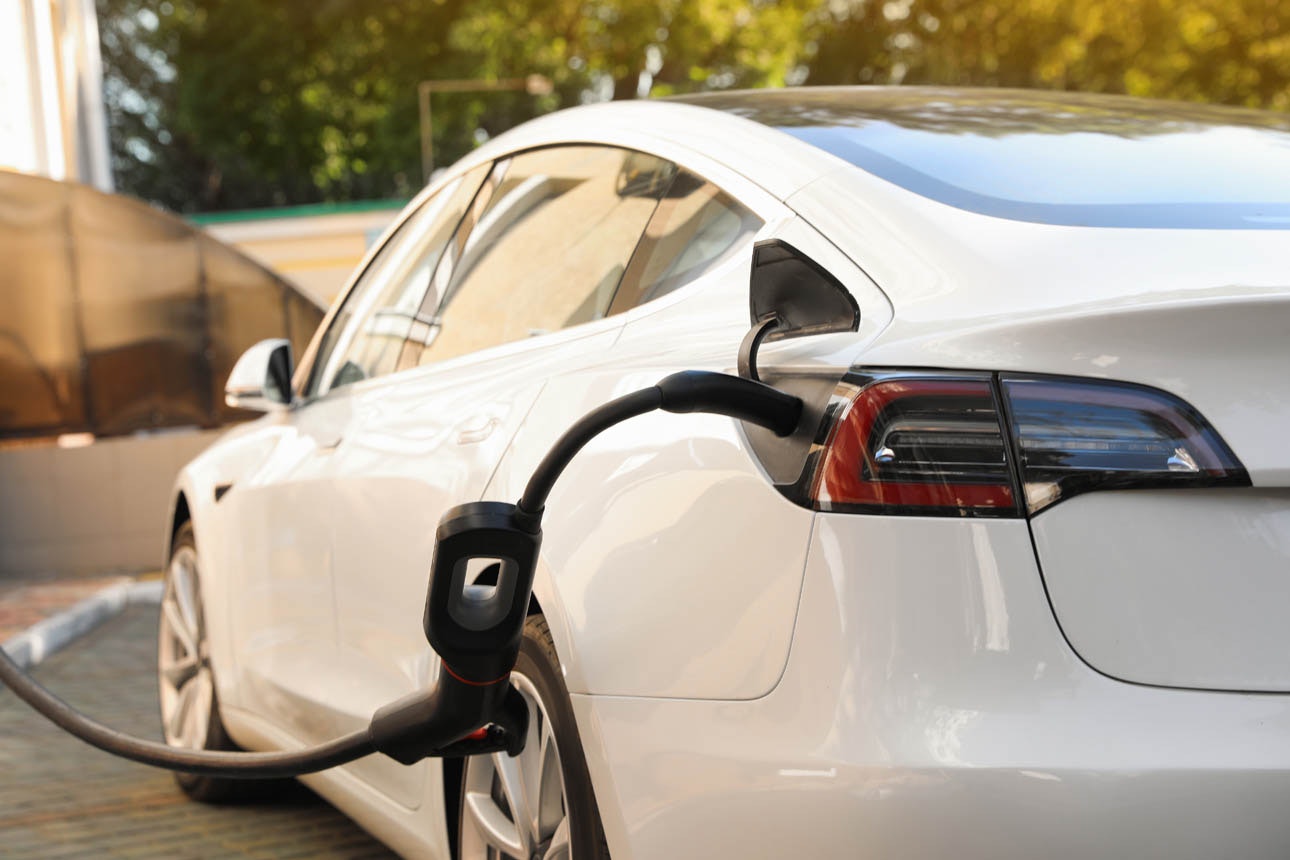
More and more vehicle owners – including those with new EVs and hybrids – are unable to access motor vehicle disputes resolution and are instead having to fund expensive cases in the district court. Aging, inconsistent regulations are to blame.
The Motor Vehicle Disputes Tribunal is a specialist tribunal that deals with complaints about motor vehicles.
It costs $89 to file a claim with the tribunal, making it an economic option for vehicle owners.
But there’s a catch – the tribunal only hears complaints where a vehicle’s gross mass (referred to as the GVM) is less than 3,500kg.
Terry Collins, principal policy adviser at the Automobile Association (AA), says some electric vehicles, newer utility vehicles and campervans are heavier than the tribunal’s weight limit. As a result, owners of these vehicles don’t have access to the tribunal.
The limit on the tribunal’s jurisdiction arises from a 1988 order in council that excludes “heavy vehicles” from the definition of a “motor vehicle”. The order defines “heavy vehicles” as vehicles that have a GVM of exactly 3,500kg or more.
The impact is that these heavier vehicles are excluded from the tribunal’s jurisdiction – it is only concerned with disputes about motor vehicles.
Collins says the weight limit is a hangover from a repealed act and is inconsistent with definitions in other legislation. In some legislation, a vehicle with a GVM of 3,500kg is not treated as a heavy vehicle, but in other cases, such as the order in council, it is.
This problem for heavier vehicle owners – like EVs, hybrids and campervans – is set to get worse, according to the AA.
“This issue seems to be growing and will continue to do so as larger EVs and hybrids hit the market due to the mass of the batteries. This is an area where the cut-off threshold for a light vehicle is not keeping in line with technology.”

Need our help?
If something’s gone wrong with a product or service, our Consumer Rights Advice Line experts can help you get a fair deal.
Get personal, practical advice you can trust – included when you join from $15 a month.
‘I have never hated something so much’: Fraser’s story
AA member Fraser Cann has had first-hand experience of being excluded from the tribunal’s jurisdiction by the rule. He said that, as a result, the cost of bringing his claim has grown from being under $100, if he’d access to the tribunal, to tens of thousands of dollars through the courts, and will now involve an extensive waiting time.
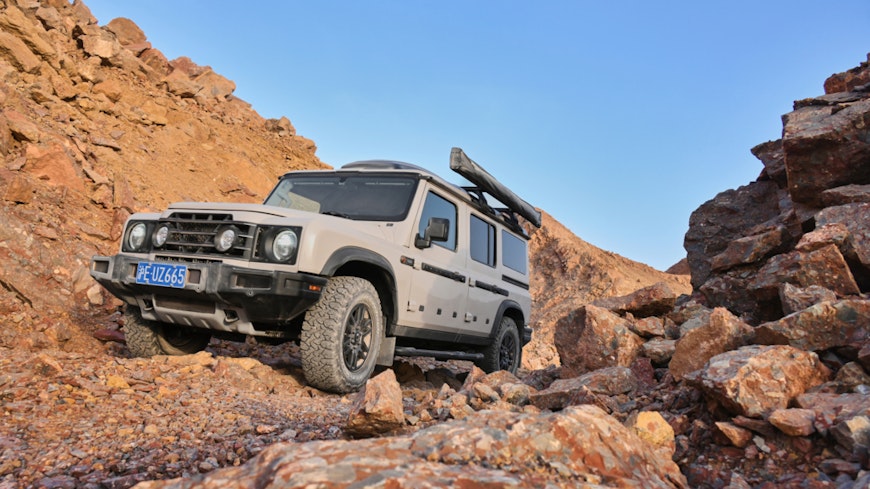
Fraser bought a brand-new Ineos Grenadier station wagon in February 2025.
It’s a pretty beefy vehicle.
“We built it to go where others hesitate. And ruthlessly tested it across a million gruelling miles, to make sure it does,” the manufacturer’s website reads.
But soon after purchasing the vehicle, things started to go wrong. Fraser said for the first 6 months of the vehicle’s life, it spent over a quarter of that time back at the dealership. Some issues were fixed; others didn’t improve, even after a visit to the dealer.
Source: Ineos.
There were a range of major and minor issues, including:
the transfer case, which enables switching between two-wheel and four-wheel drive, was faulty
the automatic braking system was damaged by a stone
a broken airbox
paint on the side steps was chipping and rusting
the heating and cooling system was malfunctioning
the wing mirrors didn’t work
the compass didn’t work
rust on the wheel hubs
the parking sensors were malfunctioning
the rear door wouldn’t shut properly.
“I have never hated something so much as this,” said Fraser. He expected the vehicle to be tough, durable and hardwearing. It was anything but.
“We’ve just lost total confidence in this product. This has gone on since almost day one of owning the vehicle.”
Consumer NZ approached Ineos for comment but received no response.
Cost of justice grows from $87 to tens of thousands
In August 2025, Fraser decided to exercise his right to reject the vehicle under the Consumer Guarantees Act.
Under the act, if a problem can’t be fixed, be put right in a reasonable time or is substantial, a consumer can reject the product and choose a replacement or a refund.
They can also:
claim compensation for any drop in value of the product
cancel any ongoing service contract
have it repaired elsewhere.
The dealership disagreed that the failures affecting Fraser’s vehicle were substantial, so Fraser decided to go to the Motor Vehicle Disputes Tribunal to pursue his case against the dealership.
But he hit a roadblock. Because the Grenadier had a GVM of exactly 3,500kg, the tribunal couldn’t hear the claim. Just a kilogram less, and it would have been inside the tribunal’s jurisdiction.
“We have found out the hard way that there is a mistake in the law,” Fraser said.
Now, Fraser has no choice but to fund the fight in the district court, something that’s likely to cost him tens of thousands of dollars more than the tribunal.
“We have gone from an $87 fee for ‘experts’ to look at the facts and make a decision fairly quickly without involving lawyers, to inevitably tens of thousands and many months in the court process to just get the same result the ... tribunal should have given us.”
Not to mention the toll on him and his family.
“The first issues I lived with it just got worse and worse and it’s proven exactly why we need protection. The amount of time I’ve wasted, costs ($4,000 plus already), family stress and I have a vehicle that is just now a large station wagon, because I am unable to use it as a 4x4.”
No room for inconsistencies in justice
Fraser’s story, and many other consumers’ stories like his, show the legal framework dealing with motor vehicles and the tribunal is inconsistent and out of date.
The tribunal is meant to provide simple, speedy and effective justice for those who use it, but right now, the legislation prevents some consumers from accessing this justice when they have problems with motor vehicles.
That’s why we’re calling on the government to repeal or amend the order in council responsible and amend the legislation to raise the monetary limit of claims the tribunal can hear. The monetary limit was last increased in 2010, from $50,000 to $100,000.
In the meantime, Fraser wants all dealers who sell vehicles with a mass of 3,500kgs or more to make prospective purchasers aware, on the information cards for the vehicles, that they won’t have access to the tribunal.
The AA also wants to see change, and according to Collins, it’s an easy fix.
Consumer put the inconsistencies to Cameron Brewer, minister of commerce and consumer affairs, the portfolio responsible for the tribunal.
Brewer said, “I have been made aware of the issue relating to the jurisdiction of the Motor Vehicle Disputes Tribunal, and I have asked officials to provide me advice on it.
“On the face of it, I agree that there is merit in having a consistent definition of ‘heavy vehicle’ across the Motor Vehicle Sales Act 2003, the Land Transport Act 1988, and the Heavy Motor Vehicle Regulations 1974.
“This government is focused on pragmatic regulation and streamlining or removing any unnecessary regulatory barriers.”
What to do if you’re affected
Make sure you check the GVM before you purchase any vehicle.
If you’ve already purchased the vehicle and you’re having issues, our dedicated advice line can give expert advice to our members.
Legislative history
Heavy Motor Vehicle Regulations 1974: Defines heavy motor vehicle as a motor vehicle that exceeds 3,500kg.
Motor Vehicle Dealers Act 1975: Section 2 defines motor vehicles, and excludes any vehicle declared by order in council not to be a motor vehicle. Repealed in 2003 and replaced by a new act, the Motor Vehicle Sales Act 2003.
Motor Vehicle Dealers (Exclusion of Heavy Vehicles) Order 1988: An order in council made by the governor general under the Motor Vehicle Dealers Act 1975, excluding heavy vehicles that weigh 3,500kgs or more from the definition of motor vehicle. Not repealed, despite the act it was made under being repealed.
Land Transport Act 1998: Defines heavy motor vehicle as motor vehicle which exceeds 3,500 kg.
Motor Vehicles Sales Act 2003: replaced the Motor Vehicle Dealers Act 1975, currently governs the tribunal’s jurisdiction.

Buying a car soon?
Our car reliability survey rated 50+ models and revealed the most reliable cars to own. Don't waste money on a lemon.