By Bryan Wall
Product Test Journalist | Kaipūrongo Whakamātautau Hautaonga
Rising power costs mean we should all be aware of which appliances in our homes are power hungry and what we can do to reduce our consumption.
At Consumer NZ, our team has estimated typical running costs for a range of heating, kitchen, lighting and general household appliances so you can work out how to make the most effective savings in your home.
Always-on appliances
Refrigeration
You probably aren’t going to replace your fridge-freezer just because a new one will cost less to run. But if you need to replace your old one, it pays to choose an energy-efficient model as fridges are always on the go, quietly sapping power and bumping up your bill.
Choosing the most energy-efficient medium-sized (376–450L) fridge-freezer we’ve tested would save $152 every year compared with a similarly sized 15-year-old model. Even an average efficiency new model would save you $109 each year.
If you’ve kept an old fridge or freezer to run in the garage, think hard about how much you need it. It could easily be costing you over a dollar a day.
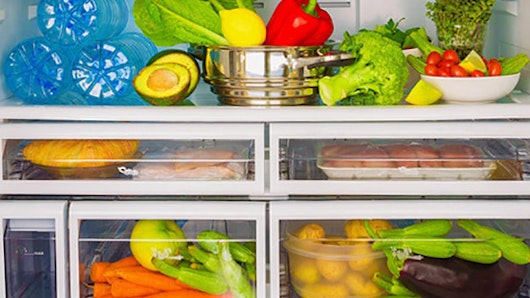
Compare fridges
Make the right choice with our test results and buying advice. Whether you’re after a tiny apartment-sized model or a huge side-by-side for a family, we have a recommendation for you.
Router
A router quietly connects your home to the world at all hours of the day and night. It does this using just 7–8W of power (a watt is a measure of the power used in 1 second). That’s an annual energy cost of $23 to keep you in touch with the outside world.
Landline
If you’re still using a cordless landline, it isn’t likely to factor in any unexpectedly large power bills. The models we’ve tested cost no more than $2 a year.
Chargers
Charging mobile devices won’t blow your power bill through the roof. For example, charging a phone like the iPhone 16 from empty every day for a year costs less than $2, while a tablet like an iPad Air, with a much larger battery, would cost around $4.
And what about the habit of leaving chargers plugged in and turned on but not connected to a device? A charger left on will use some energy – it’s not a lot, but it’s still a waste of power, and if you’re at all energy conscious, you might want to get into the habit of turning off your chargers each time you disconnect them from your appliances.
But to put your mind at rest, we measured the power use of a few typical chargers. None of the phone, tablet, laptop or generic USB chargers we plugged in and tested drained more than 0.5W of power. The highest power use we found was a bike light charger that drew 1.9W.
TIP: It’s easy to tell if your charger is a drain – if it feels warm, it’s using energy, so turn it off.
On standby
Any energy used when an appliance is on standby is wasted energy. We measured standby power for technology and appliances we’ve tested and calculated the best and worst performers over a year. The data varied a lot depending on the appliance type and model.
A rule of thumb is: the dumber an appliance is, the less energy it will consume while on standby. Many older models use no energy or only a small amount to power a standby LED. Smart appliances are more likely to maintain connections to Bluetooth and WiFi and can have background processes running even when turned off. Watch out for smart devices that are in ‘sleep’ mode.
We found several models of TV, home theatre, games console and microwave oven, as well as some larger appliances that generate 2–5W when on standby. A microwave on standby quietly chugging through 5W every second costs almost $14 a year just to sit there – that’s before you’ve microwaved any spuds! It pays to turn off these devices at the wall.
The worst offenders were some models of printers that produced more than 100W on standby, akin to leaving an old filament light bulb switched on 24/7, just so you can print at a second’s notice. But that convenience might be costing you $23 each month.
TIP: The only sure way to kill standby energy use is to unplug the device or turn it off at the wall when you aren’t using it.

Need a new TV?
Is your streaming service wasted on a TV with a grainy picture and muddy audio? We can help with that, too. Check out our reviews of 43 TVs to find one that does your favourite shows justice.
Cost of hot water
Heating water is a big power consumer. The Energy Efficiency and Conservation Authority (EECA) estimates that a typical hot water cylinder could cost around $480 per year to run.
But don’t switch off your cylinder or be tempted to turn down the temperature. Legionella bacteria, which cause the potentially fatal Legionnaires’ disease if inhaled, love warm stagnant water between 20°C and 45°C but cannot grow at higher temperatures. The building code recommends keeping your hot water cylinder at a minimum of 60°C for this reason.
However, you can minimise the costs of heating your water by making sure your cylinder and pipes are well insulated (fit an insulation jacket over them) so you’re heating water, not the air around it.
You could also look at investing in a hot water heat pump, saving you around $300 on those running costs – but bear in mind a hot water heat pump can cost over $8,000 to install (although some banks offer interest-free loans for installs).
But probably the easiest way to reduce the cost of hot water is to use less of it. Here are some suggestions for ways to cut back on your hot water use.
Baths and showers
A 10-minute shower under a standard shower head can use over 150L of water at a cost of about $1.60. Fitting a water-efficient WELS 3-star shower head or a flow reducing disc (less than $10 from DIY stores) can reduce the water flow to around 60L. Cut your shower time in half as well, and your ablution could end up costing you only around 50c.
TIP: Time how long it takes your shower to fill a bucket to the brim. If the bucket fills in less than a minute, you’ll save water and money by fitting a flow-reducing disc or WELS 3-star shower head.
If you like a bath, be aware that each soak is likely to cost you over $1.
Dish and clothes washing
Handwashing your dishes is a surprisingly expensive process as kitchen sinks can be quite large. If you handwash then rinse the dishes in hot water, we estimate it’s costing 38c (a 15L sink filled twice).
A standard-sized dishwasher can wash at least two sink loads of dishes in one go, so using a dishwasher will save you money – it’ll be around half the cost.
TIP: Avoid the half-load dishwasher setting – it can cost as much as a full load. Use an auto-sensing cycle instead. The dishwasher will sense the amount of dirt in the water in the early stages of the cycle – less dishes generally means less dirt, which means a shorter cycle and less energy use.
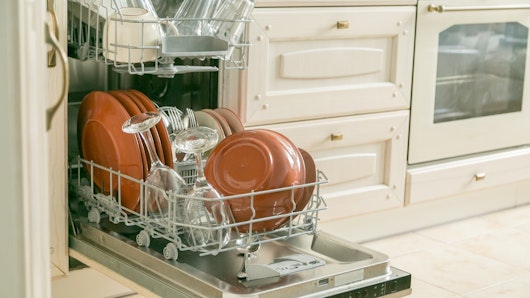
Looking for a new dishwasher?
Find the best dishwasher for your home with our reviews, including for popular dishwasher brands Bosch, Haier, and Fisher & Paykel.
How to calculate power use and cost
Energy ratings
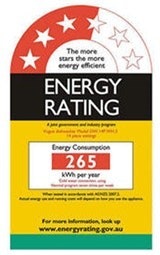
If you’re shopping for a new whiteware appliance, TV, computer monitor or heat pump, you’ll see an energy rating label prominently displayed on the products.
The label shows a simple star rating – the more stars, the more energy efficient the appliance. The label also features an annual energy consumption (kWh per year) amount, calculated from average expected use.
When comparing models of the same type – for example, small top-mount fridge-freezers – the one with the most stars will be the cheapest to run. But if you’re comparing different sized or types of appliances – for example, a small top-mount with a large French-door fridge-freezer – you can’t compare stars and need to use the kWh per year figure to find out which will be the cheapest to run.
Small appliances
Smaller appliances don’t display energy ratings labels like whiteware items do, but you can still calculate and compare running costs.
Your electricity bill shows how much energy you’ve used in kilowatt hours (kWh). You can calculate the energy an appliance uses by multiplying its power by the number of hours it’s in use.
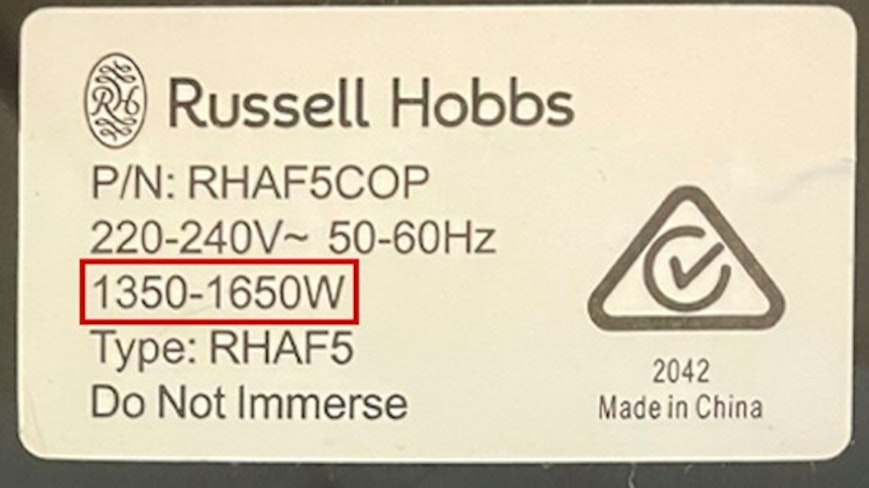
Air fryer power rating label.
You’ll find a label on every electrical appliance that tells you how much power it consumes (in watts) – 1,000 watts is equal to 1kW. The most power an appliance with a regular three-pin plug can use is 2,400W or 2.4kW in 1 hour. Therefore, you’d be billed for 2.4kWh of electricity. On average in Aotearoa, 1kWh costs 32¢, so that appliance, running for an hour, would cost you 77¢ (2.4 x 32).
The Russell Hobbs air fryer shown has a maximum power of 1.65kW (1,650W). If you used it for 30 minutes on maximum power, you’d use 1.65kW ÷ 2 = 0.825kWh. So, a meal of air-fried nuggets and chips would cost you 32¢ x 0.825 = 26¢ to cook. Cheap as chips, right?
Typical running costs
The following tables list the typical running costs for a range of appliances, using the average electricity cost of 32c/kWh.