By Jessica Walker
Communications and Campaigns Manager | Pou Whakahaere Whitiwhiti Kōrero, Kaupapa Whakatairanga
The energy sector is rarely popular, but 2026 has been a standout for all the wrong reasons.
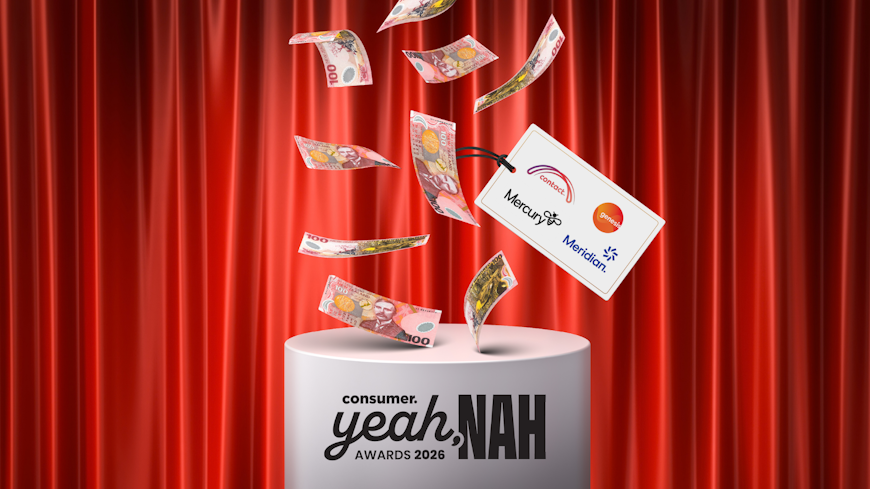
Power bills have risen about 20% in just two years, while business is booming for the major players in the sector. So we’ve given our Yeah, Nah “Power Trip” Award to the electricity market for failing its customers: raking in record earnings while people struggle with their power bills.
Power bills have put the heat on households
This winter, New Zealanders were more likely to name power bills as a financial concern than mortgage or rent payments. For too many people, choosing between heating and eating is a grim reality. This should not be happening in a country blessed with mostly cheap renewable energy. The OECD Economic Survey says wholesale power prices in New Zealand are “now uncomfortably high” and “far higher” than in countries with similar renewable energy systems.
Since the electricity market reforms of the late 1990s, household power bills have risen at nearly twice the rate of inflation, putting growing pressure on families.
Cost increases since 1999 relative to inflation
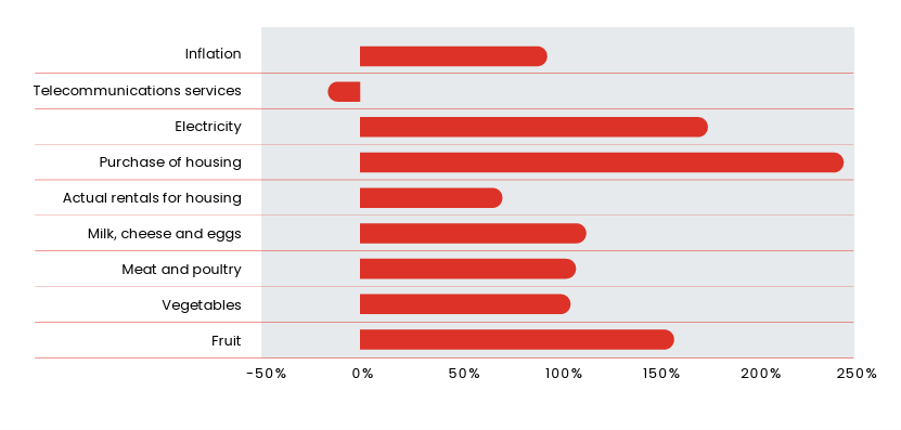
Source: Stats NZ. Consumer Price Index (CPI) level 3 classes for New Zealand, Q4 1999 to Q4 2025.
Every energy hardship indicator we track moved in the wrong direction in 2026. More people struggled to pay their bills, borrowed money to cover costs, missed payments and faced overdue fees.
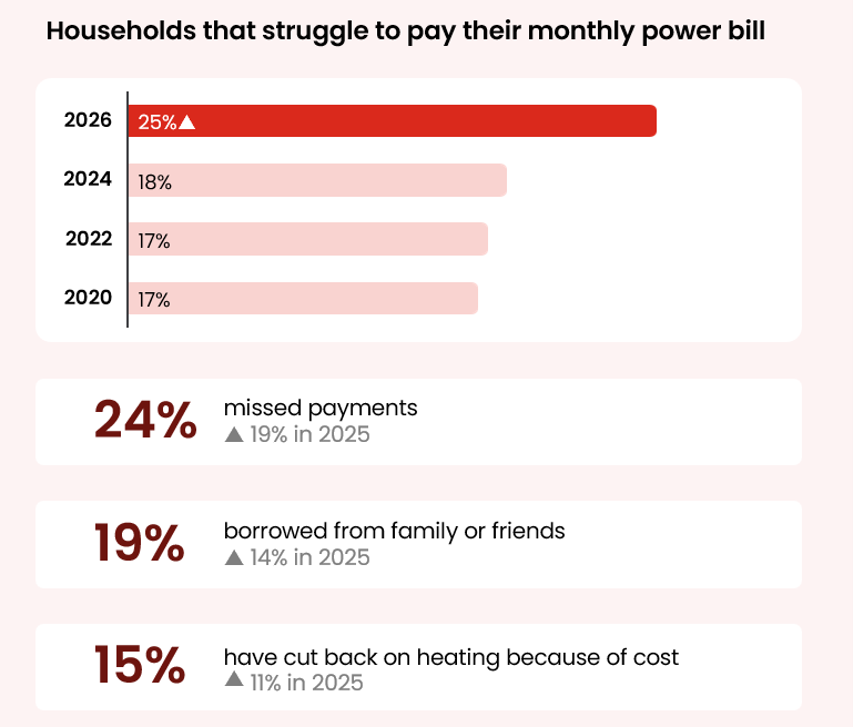
Source: Consumer NZ Energy Retailer Survey, April 2026. Base: New Zealanders aged 18+ (n=1,937).
No electricity retailer earned a Consumer NZ accolade
Our People’s Choice award recognises businesses that achieve above-average customer satisfaction and meet our other performance criteria.
Powershop has won the award seven times since 2015, but recently, thousands of customers have left the Meridian Energy subsidiary because they’re fed up with higher-than-expected power bills and ongoing problems with the company’s new app. This year, for the first time in more than a decade, no electricity retailer cleared the People’s Choice bar: highly satisfied customers and our confidence that the company is doing a stellar job of looking after them.
The share of energy customers who describe themselves as very satisfied has fallen steadily for three years, even as satisfaction has risen in other sectors.
Energy satisfaction is softening while other tracked sectors have improved
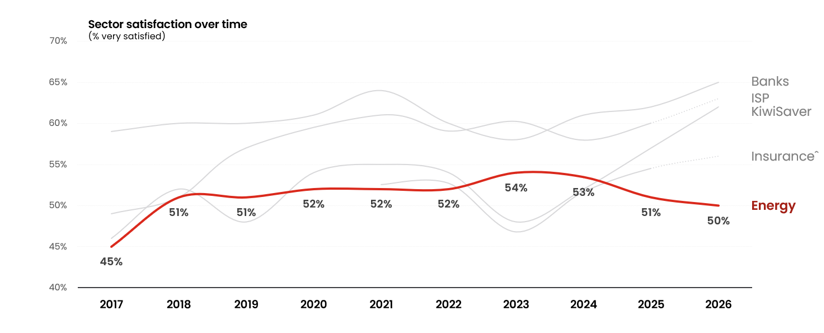
Source: Consumer NZ market research, 2017–2026, including Energy, Banking & KiwiSaver, Insurance and Telecommunications Satisfaction Surveys. Note: Surveys are independent, were fielded at different times, and base sizes vary by survey and year. Insurance combines car, house and contents insurance. Dotted lines for Insurance and ISP (internet service providers) show the trend. The 2026 Insurance and Telecommunications surveys will be fielded in Q4. "Very satisfied" = ratings of 8–10 out of 10.

Are you paying too much for power?
We'll help you compare and find the best electricity and gas plan. Check now to see if you’re getting the best deal.
But it’s not bad news for the big four
Together, Contact, Genesis, Mercury and Meridian – the “gentailers” (retailers that also generate power) – control about 85% of the retail market. Each also owns substantial generation assets, giving them advantages that smaller independent retailers and generators do not have.
It’s proven almost impossible for independent retailers to enter and thrive in the market. When wholesale prices rose sharply in 2024, Electric Kiwi stopped taking on new customers because it faced increased wholesale prices of almost 50% over a six-month period. Flick, a popular independent retailer, also stopped taking on customers and was acquired by Meridian.
When conditions become challenging, the independent retailers are more likely to pull back or exit the market completely, while the dominant players remain.
In 2026, the big four reported combined annual earnings of more than $3.6 billion – over $1 billion more than in 2025. Their combined annual net profit was $959 million.
The dividends paid to shareholders have recently raised eyebrows. The OECD reports that gentailers consistently paid out 90–240% of net income in dividends, totalling NZ$11.8 billion in the decade to 2025 – NZ$4.5 billion more than their net profits. It says New Zealand’s dividend payout ratios far exceed international norms, constraining reinvestment. Good news for shareholders; not so good for consumers.
More power in the pipeline
Whenever eye-watering gentailer profits are announced, we are told the money is needed for investment. That is hard to stomach when New Zealand’s generation capacity has grown by just 15% over the past 25 years. There is a financial incentive for the gentailers to delay investment rather than get ahead of demand– which is one reason power bills remain so high. There is finally a healthy-looking generation pipeline showing 120 projects proposed by independent developers and 42 by gentailers. We hope this will have an impact on power prices for consumers.
The market is failing consumers
So, while no electricity retailer earned a People’s Choice award in 2026, the sector will not go entirely without recognition from Consumer NZ. We are giving it an award no one wants to win.
Customer satisfaction is falling. Hardship is rising. Gentailer earnings are through the roof. Is the electricity market working for consumers? Yeah, nah. The electricity sector is the worthy winner of our “Power Trip” Award.

Yeah, Nah Awards
Our Yeah, Nah Awards highlight the worst of the worst in business to pressure poor-performing companies to up their game.