By Bryan Wall
Product Test Journalist | Kaipūrongo Whakamātautau Hautaonga
At only $149, could this be the answer to squeaky-clean windows on a budget?
Window cleaning isn’t everyone’s idea of a fun weekend activity, especially if your windows are high up or otherwise hard to access from the outside. Kmart reckons it can relieve you of this chore with its “hassle-free” Robotic Window Cleaner. But how well does it actually work?
At a glance
We weren’t impressed by the Kmart Robotic Window Cleaner’s performance – the results were nowhere near as good as an old-fashioned manual clean.
Pros:
Useful for hard-to-reach outside windows
Okay for maintenance after a good manual clean
Cons:
Spreads dirt around and leaves smudge marks
Circular cleaning pads can’t reach into corners
Water spray floats away instead of landing on glass
What is a robot window cleaner?
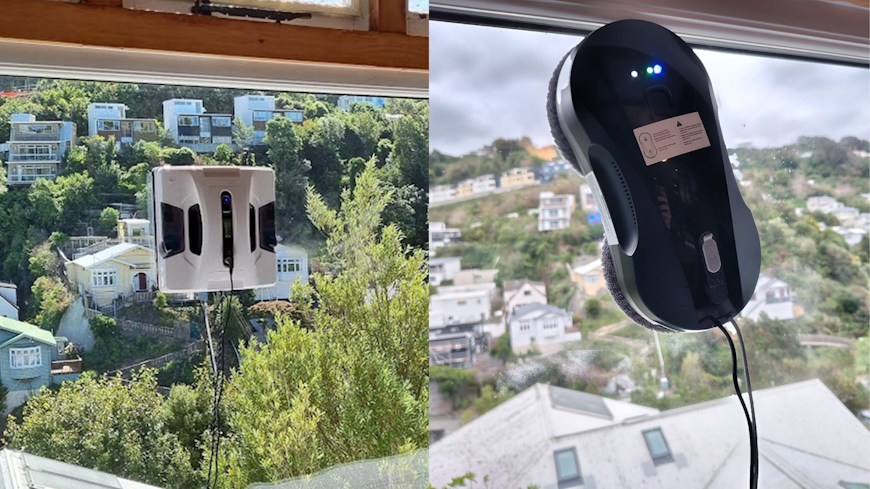
There are two main types, and both use suction created by an onboard motor to clamp themselves on to your window glass. Square-shaped robot window cleaners use rubber tracks to move around whilst spraying the glass and wiping it clean with the onboard mopping pad.
The Kmart model is the other type, which has two rotating mopping disc pads that allow the robot to wiggle across the window, simultaneously wiping as it goes.
Edge sensors detect the window frames, and the robots will follow a zig-zag route to clean the whole window before returning to its starting position.
Tell us more in the comments!
What does Kmart’s robot window cleaner come with?
The cleaner itself is a shiny plastic lump that’s quite large and weighty. It has two large microfibre mopping pads on the underside, and there are spares included in the box. There is also a remote control, a power adaptor with a lengthy cable, an equally lengthy tether cord and a small water bottle for refilling the onboard water tank.
How do you set it up?
Before you can start cleaning, the onboard battery needs to be fully charged, which the manual states can take between one and two hours – in reality it only took about 30 minutes (subsequent charges will be quicker, as the battery only gets used if there has been a cut to the mains power).
“A battery?” I hear you say. “Why does it have a power cord, then?” Well, the onboard battery is just back-up in case there’s a power cut or the cord is accidentally pulled out of the power socket during cleaning. This gives the robot around 20 extra minutes before it falls off the glass and squashes your cat.
You also need to fill the onboard tank with water. Then the tether cord has to be attached to something solid – we used the leg of a sofa next to the window. In the unlikely event of the robot falling off the window, the tether cord will stop it hitting the ground (or pull the sofa out of the window with it!).
How do you use it?
Once set up, the cleaning steps are as follows:
Press and hold the power button for a few seconds to turn on.
Place the robot onto the glass and it will suction itself on.
Press the water delivery button to select either a wet or a dry (dust) clean.
Choose cleaning route (up, left or right) on the remote – this starts the cleaning.
Put your feet up and watch the entertaining wiggle of the robot across the glass.
The manual suggests doing a dry clean first without water – essentially removing dust from the glass – then taking the robot off the glass (press and hold the power button to turn it off), popping on new cleaning pads and running the cleaning process a second time with the water spray on.
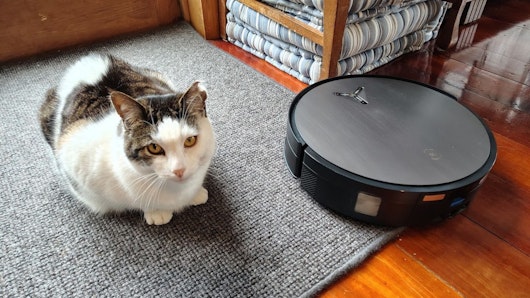
Are robots better at vacuuming than cleaning windows?
Find out with our robot vacuum test results.
Does it work?
If you have really grubby windows, robot window cleaners aren’t going to be the solution. They should be seen as maintenance cleaners for windows that have already had a good manual clean.
The circular cleaning pads on Kmart’s model mean it cannot get into corners, so you’ll still have to manually clean those.
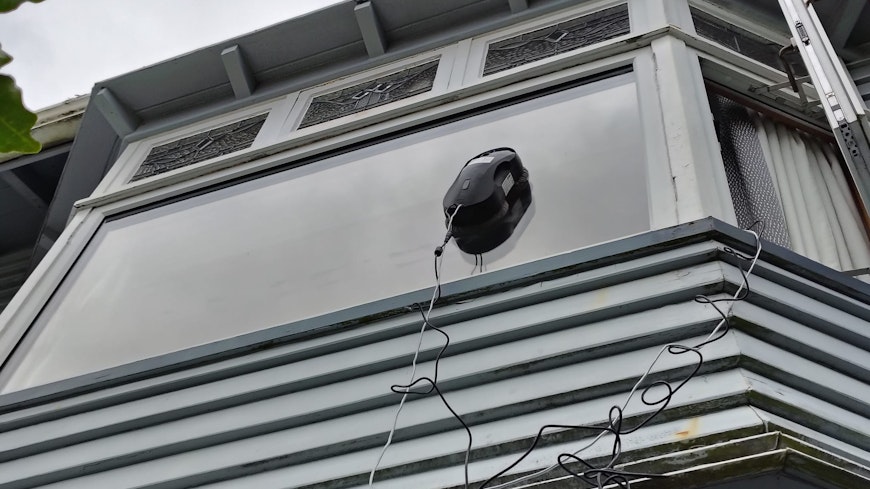
The main problem, though, is the water-spray function. The water is “nebulised” into a mist, but most of the time – especially if you are cleaning the outside panes – the mist just floats away from the glass, even in relatively calm weather conditions. So you’ll often be cleaning without any moisture on the glass, which makes it more difficult to remove dirt.
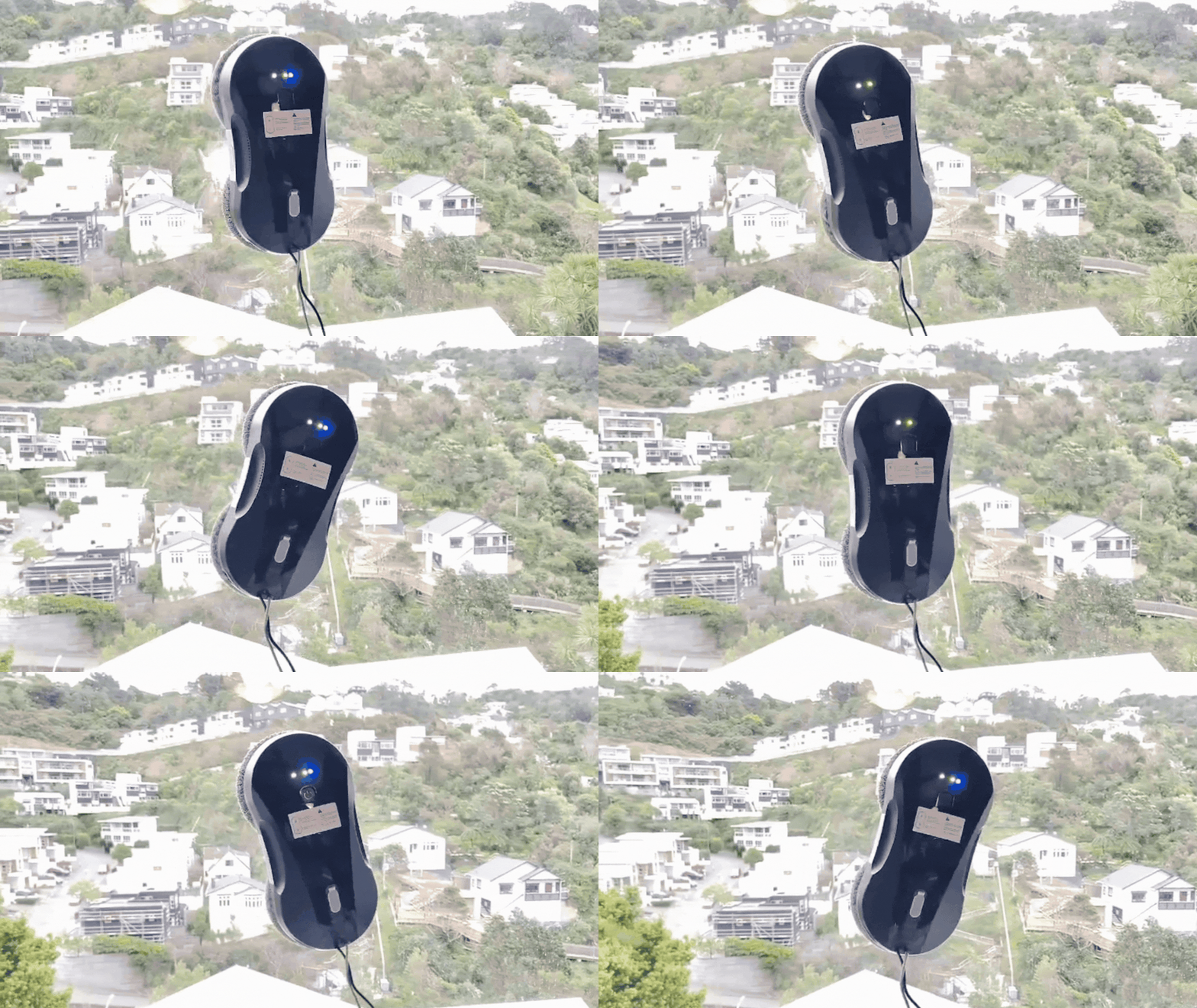
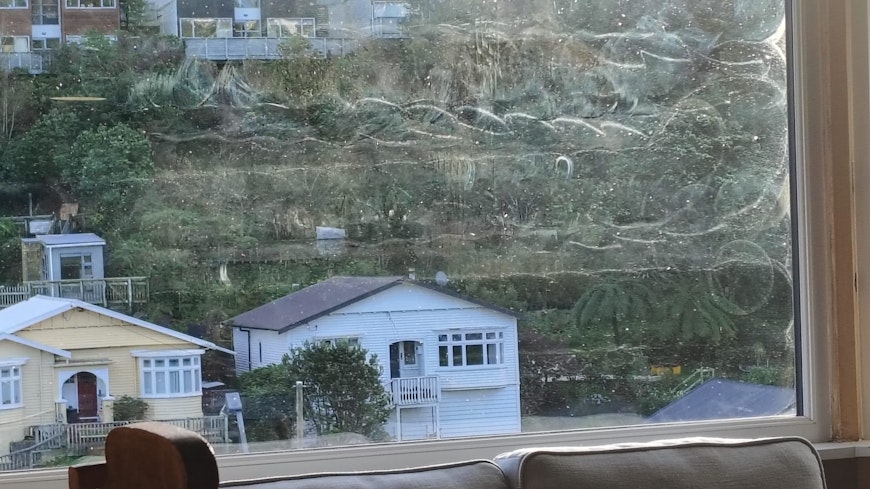
Even without moisture, the Kmart Robotic Vacuum Cleaner does remove some dirt. But when the sun shines on the glass at the right angle, you notice a lot of it has just been smeared about and the circular pads have left a pattern of smudge marks.
Who is it good for?
If you live in an apartment block or have windows high up that can’t be accessed easily from outside, the Kmart robot could help, but you’ll never get your windows properly clean with it. (And it’s no good if you don’t have an adjacent window that opens, because you need to reach outside and attach the cleaner.)
It’s more effective indoors, where the water spray is more likely to actually get onto the glass, but all the faffing and time spent setting it up and moving from pane to pane doesn’t really make it a hassle-free option.
A window vacuum and some microfibre cloths would be a better option. We’ve researched the best way to clean your windows – check out our guide.
Would you buy a robot window cleaner? Share your thoughts in the comments.

9 of the best things to buy at Kmart
Sometimes, despite costing a lot less than the other products we’re testing, Kmart products come out on top.