By Bryan Wall
Product Test Journalist | Kaipūrongo Whakamātautau Hautaonga
Do you “vent” your frustration every year as you try to dry washing during the damp winter months?
Many households don’t own a clothes dryer as they think they’re too expensive to buy and run.
But a vented dryer may be more economical than you think.
A good vented dryer can be had for around $600. Although vented dryers are more expensive to run than heat pump dryers, over the course of their lifetime they’ll cost you less when you factor in the cheaper purchase price.
What is a vented clothes dryer?
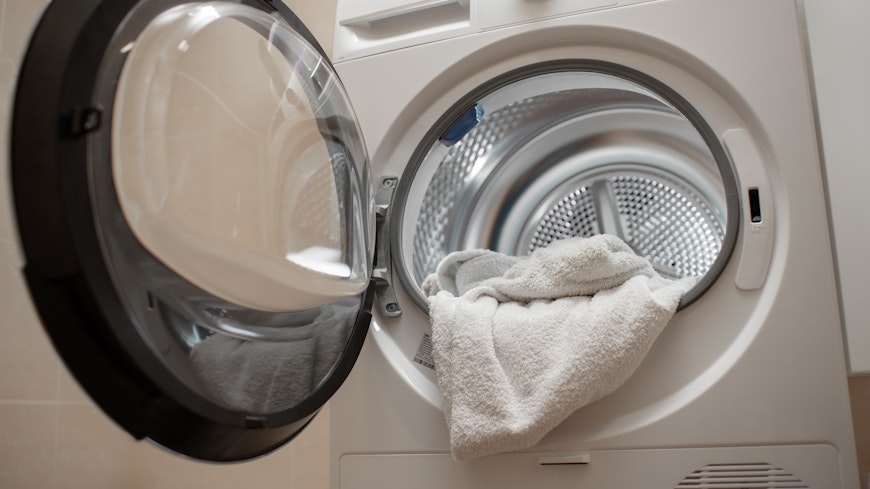
A vented clothes dryer is the simplest form of dryer. A heater blows hot air into a spinning drum of clothes, and the moist air is sucked out through a flexible pipe. Vented clothes dryers should be vented to the outside, so the machine needs to be close to an outer wall, with a hole cut out for the vent.
A heat pump dryer, on the other hand, is the most complex of dryers. These dryers use a heat pump to dry the clothes, with the moisture collected in a container or drained externally.
There is also a third type of dryer. Condenser clothes dryers sit in between the other two types, and don’t need to be vented, as they collect the moisture from the drum in a container – which you need to regularly empty. These days, we’re seeing less condenser models on the market, as manufacturers turn more towards energy efficient heat pump models.

Looking for a clothes dryer?
Choosing the right clothes dryer pays off in the long run. We’ve tested heat-pump, condenser and vented clothes dryers to find the most efficient, easiest to use and fastest.
How much do vented clothes dryers cost?
There are currently six vented dryers in our test, with an average price of $765. The cheapest model is $569.
In comparison, the average price of heat pump dryers is $2,230, with the cheapest model being $1,098 and the most expensive a whopping $5,199!
How much do vented clothes dryers cost to run?
When we test clothes dryers, we record the amount of energy used to dry a 3.5kg test load, then calculate the cost.
For vented dryers, the average cost per load is 96c; for heat pump dryers, it’s just over a third of this at only 36c.
Clearly, heat pump dryers are much cheaper to run.
But we also calculate a 10-year lifetime cost for the models we test, including the initial purchase price, cost to dry 100 loads per year and inflation allowances.
This paints a different picture.
The average lifetime cost for a vented dryer is around $1,600, compared to over $2,400 for a heat pump dryer.
So even though a vented dryer is more expensive to run, it can work out significantly cheaper for you in the long run. The caveat is that, if you use your dryer more often (around 10 times a week), it then becomes more cost effective to go the heat pump route.
What about performance?
Another reason we love vented dryers is they tend to be better performers.
The drying performance score in our test is based on how quickly models dry the test load until there is less than 6% moisture left.
On average, vented dryers score 74 for drying performance, compared to only 60 for heat pump dryers. That’s because vented dryers are quicker, taking on average less than 2 hours to dry the test load, while heat pumps dryers take an extra 30 minutes, on average.
Garment wear and tear
Vented dryers can also achieve higher temperatures than heat pump dryers. Yet although your clothes will dry quicker, the higher heats can be rougher on them.
Check garment labels to see if items can handle heat before chucking them into a vented dryer. If you have a lot of expensive or delicate clothes, a gentler heat pump dryer might be a better bet.
Energy efficiency and environmental concerns
In the long run, a vented dryer is likely to cost you less. But what about the environmental cost?
Using more energy isn’t a good thing. The UK has plans to ban the sale of vented dryers that don’t meet certain energy efficiency requirements. The same might happen here.
We calculate an energy efficiency score for dryers during our test. Check these scores before you decide.
And remember that environmental impact is broader than simply energy used to operate. Heat pump dryers are more complex than vented ones, meaning there are more parts to manufacture and hence more environmental cost in the materials used and energy expended at this stage.
The worst vented clothes dryer
Not all vented clothes dryers are equal and there’s one model we reckon you should avoid.
The best vented clothes dryers
We recommend two models.