There’s more to a set of headphones than what they sound like and how they fit. We’ve independently tested well over 100 headphones for sound quality and comfort, but also things you might not have considered like battery life, durability and sound leakage.
We’ve looked at every style, from over-ear cups to open-ear buds, and from wired models to true wireless earbuds with active noise cancelling. We buy all the models we review, so you can trust our advice to be completely impartial.
Let’s step through the buying process to help you find the right product for the right price.
Choosing wireless vs wired
You won’t get a lot of choice – today’s headphones are usually wireless, connecting to your audio source via Bluetooth.
For the best possible audio quality, some wireless headphones also come with a cable you can plug directly into the source. In our reviews, we call these wireless (wire optional).
Wired headphones with no Bluetooth connectivity are uncommon today. They’re less convenient, and we generally think you should avoid them, although they’ve recently made a comeback among consumers embracing a retro aesthetic.
Find the best headphones
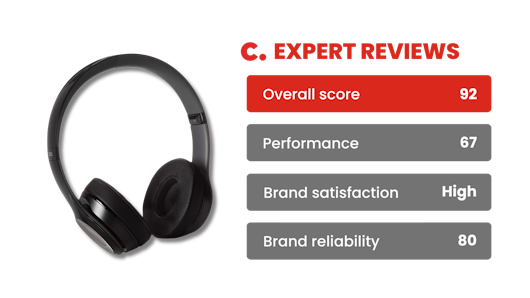
We've independently tested more than 150 models currently available from 30 brands to help you avoid an expensive mistake.
Which type of headphone should you buy?

On-ear and over-ear headphones
These styles have padded earcups that sit on (against) or over (enclosing) the ears, connected by a headband.
A good set provides great sound quality, noise isolation and comfort.
A good choice for:
Long listening sessions
Very noisy environments
Home use
Less suitable for:
Exercising, as they’re heavy and can make your ears hot
In-ear headphones (earbuds)
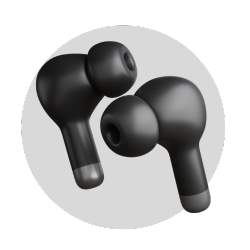
Because earbuds are small and light, they’re easy to transport and can be used in nearly any situation.
Most earbuds are completely wire-free, known as true wireless. Some, however, are connected to each other by a wire that sits around the back of the neck. Confusingly, these are still called wireless because they connect to the audio source via Bluetooth. They’re a bit fiddlier to use, but you’re also less likely to lose them.
Some in-ear headphones have ear hooks or stabilising fins to keep them securely in place when you’re moving.
A good choice for:
Travel, including commuting
Exercise (as long as they fit securely so won’t fall out)
Less suitable for:
All-day use, because they can get uncomfortable and may need recharging
Open-ear headphones
Open-ear headphones leave your ear canals clear so you can hear the environment. There are two main types:

Bone conduction headphones vibrate through your cheekbones instead of directing sound into your ears. They tend to stay in place and keep your ears cool, making them great for exercising. See our full article about bone conduction headphones.

Air conduction headphones have small speakers placed beside, but not inside, your ear canals. They either hook over, clip onto or sit in the bowl of your ear. Air conduction headphones are typically true wireless.
A good choice for:
Staying aware of your surroundings when outdoors
Less suitable for:
Extremely noisy places, because they don’t block sound
Quiet but crowded places like libraries or offices, because they can leak sound (see Will other people hear your music?)
Do you need noise cancelling?
Headphones with active noise cancelling (ANC) let you reduce environmental noise. They detect external sounds via microphones and cancel them out by playing the “opposite” sound waves.
Most ANC models also have a transparency mode – sometimes called ambient or hear-through mode. This mode amplifies external sounds and blends them with your audio so you can remain aware of your surroundings. It’s basically noise cancelling in reverse.
It’s rare for open-ear headphones to have ANC, and we’ve found it doesn’t work well in those models.
But if you’re shopping for over-ear or in-ear headphones, we recommend looking for a model with ANC. You’ll probably use it more often than you expect, and it doesn’t always mean a big jump in price – you can get both in-ear and over-ear headphones with ANC and the Consumer Recommends tick for less than $200.
However, not all noise cancelling modes are built equally – some are far more effective than others. As part of our test, we assess how good the noise cancelling is on every model that claims to have ANC. The highest noise-cancelling score we’ve awarded is 91 out of 100, while the lowest is just 15. Check our reviews to compare headphones with active noise cancelling.
Passive noise cancelling is different
Watch out for claims of passive noise cancelling (also called noise isolation). This describes the headphones’ ability to block noise physically, like earmuffs do. While passive noise cancelling works well in some cases, it’s very different from ANC and you can’t turn it off when you want to hear your surroundings.
How long should the battery last?
Wireless headphones usually have a claimed battery life on the box.
You should expect over-ear headphones to last for 30 hours, or 20 hours with active noise-cancelling turned on.
True wireless earbuds should last 6 hours on a single charge, and the charging case should provide about 25 hours of additional battery life before needing to be plugged in itself. But lower your expectations if you’ll keep noise cancelling on full-time.

We measure battery run time in our lab test. In our reviews, you can see how long each pair lasted from both a full charge and a quick 15-minute charge, as well as the time they took to recharge. For in-ear buds, you can also see how many full charges you’ll get from the charging case. Our results rarely match what manufacturers claim.
Will other people hear your music?
If headphones don’t form a good seal or are poorly designed, they’ll leak sound. Some on-ear and air conduction headphones are particularly prone to this issue, but not all.
If you don’t want others to hear what you’re listening to or don’t want to be a nuisance in a quiet environment, check our test results for a model with a good sound leaking score.
What other features should you look for?

Several ear fittings
Most earbuds come with different sized tips so you can match them to your ear canals; if there’s only one size, they may not fit properly.

Controls
You should be able to adjust volume, play/pause and skip forward/back using only your headphones, without having to use your phone or computer.

Water resistance
An ingress protection (IP) rating indicates dust and water resistance. Higher numbers offer greater protection, which is particularly important if you often wear your headphones outside or while exercising.

Auto-pause
Some models will automatically pause your audio track if you remove the headphones, so you don’t run down the battery or lose your place in a podcast or audiobook.

Bluetooth multipoint
Some headphones can be paired via Bluetooth to more than one device at a time. This can be convenient when you need to quickly change tasks, for example when taking a phone call while watching a video on your computer.

Foldability
Many over-ear and on-ear headphones can be folded, making them more compact for transport or storage.