So you’ve decided to buy an electric bike – now you’ve got a few decisions to make, and we’re here to help. We test e-bikes for different terrain and riding styles , including urban, road, trail and mountain biking, plus carrying cargo. We score the bikes in our reviews for each of these uses, so you can see what the e-bikes that you like can do.
On this page
- Which type of electric bike should you buy?
- What to know about motors
- What to know about batteries
- How many gears do you need?
- How much should you spend on an electric bike?
- Which electric bike features do you really need?
- Where’s the best place to buy an e-bike, and what questions should you ask?
- What else should you buy with an electric bike?
- 5 things to keep in mind when you start riding an e-bike
Which type of electric bike should you buy?
Start with how you’ll use the bike. An electric bike that’s comfortable for short trips around town may not be the best choice for long rides, rough trails or for carrying kids and groceries.
Many of the e-bikes we've reviewed suit multiple riding styles, so instead of assigning them to a single style, we test and score them across each one.
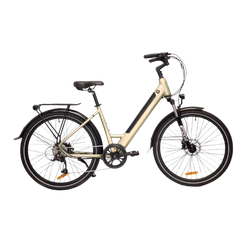
Daily (urban) electric bikes
Daily electric bikes are designed for riding around cities and other urban areas. They’re sometimes called Dutch or city e-bikes. They often have a low step-through frame, which makes getting on and off easier, and a wide, comfortable seat and swept-back handlebars so you’re sitting upright.
These bikes can have up to 10 gears, sometimes built into the rear hub. Compared with a similar unpowered bike, an electric urban bike can help you ride faster, travel further and tackle hills more easily.
Some e-bikes can be folded, which can be useful if you take your bike on public transport or need to store it inside at home or work. Folding electric bikes generally have smaller wheels but otherwise ride much like recreational or urban bikes.
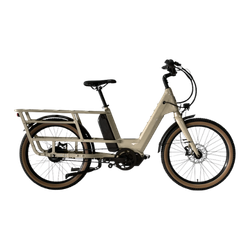
Cargo electric bikes
Cargo electric bikes are longer than most other e-bikes, giving you extra carrying space behind the seat or in front of the handlebars. Their frames are usually strong and rigid, and they often have smaller wheels.
Adding a motor makes a cargo bike a practical alternative to a car for some trips – you could transport anything from a week’s shopping to a couple of small children.
If carrying loads is a priority, check the cargo-carrying score in our e-bike test results rather than assuming every bike with a rack will do the job equally well.
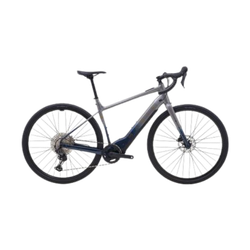
Road electric bikes
Road electric bikes are sometimes called commuter, recreational or hybrid e-bikes. They’re versatile models for everything from commuting to longer weekend rides on gravel trails.
They usually have flat handlebars, narrower tyres and a “racier” riding position than an urban bike. This can make them faster and more comfortable over longer distances.
However, they may be harder to manoeuvre on busy city streets and aren’t always well equipped for carrying luggage or shopping.
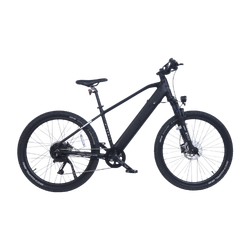
Trail and mountain electric bikes
Trail and mountain electric bikes are designed for off-road riding. They have suspension at the front and sometimes at the rear, along with wide handlebars and wide, knobbly tyres.
These e-bikes are built for rougher terrain, including grade 3 and higher mountain-biking tracks but are also sometimes used as urban or commuter bikes. They’re robust, generally have a wide range of gears and powerful brakes, and can offer a balance between the comfort of a city bike and the speed of a recreational bike.
The trade-off is that off-road tyres can create more drag on sealed surfaces. These bikes also don’t usually include practical commuting gear such as mudguards and luggage racks.

Know what type of e-bike you want?
Get comparing. Our test results can help you find the best e-bike for your budget.
What to know about motors
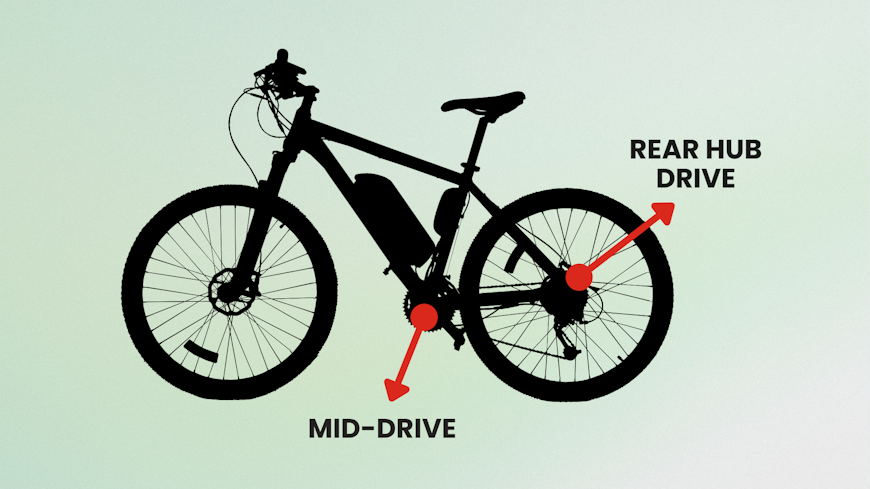
We recommend a mid-drive motor that delivers better hill-climbing ability, stronger performance at speed and more balanced handling. Rear hub motors are usually cheaper and quieter but can feel less capable on steep terrain.
A good motor should respond instantly when you start pedalling, stop assisting when you stop, and feel smooth rather than jerky. The best systems make hills feel almost flat.
Most e-bikes assist up to 32km/h, though we found 25–30km/h offers the best balance of speed and comfort. For longer road rides, consider a model that assists to 40km/h or more.
The motor system includes a display and controller. Display screens mounted in the centre of the bars are the easiest to use. We prefer uncluttered displays showing the essentials: speed, assist level and battery remaining (or predicted range). The controller lets you choose the assistance level, operate lights and use the bike computer functions. The best controllers use thumb buttons near the grip, with distinct assist (+/-) buttons that you can find without looking.
Many newer systems connect to a smartphone app, adding ride tracking, navigation, diagnostics and theft protection features. These aren't essential, but they're useful once you've experienced them.
What to know about batteries
E- bike batteries are usually built into the frame or mounted on a rear rack. Because batteries are heavy, lower-mounted batteries improve handling and stability. Rear-rack batteries, sometimes found on step-through models, can make a bike feel rear-heavy and less stable when carrying loads.
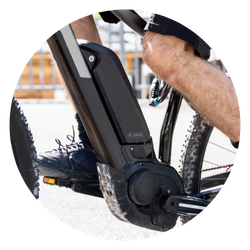
All the e-bikes we've tested use lithium-ion batteries with at least 418Wh of capacity, enough for around 30km of maximum assistance. To ride further, you'll need to use lower assist levels or choose a bike with a larger battery.
Most batteries can recharge from 30% to 100% in under three hours, depending on the charger.
Battery systems are generally well weatherproofed and performed reliably in our winter testing in atrocious weather.
E-bike batteries gradually lose capacity over time. Bosch says its batteries retain 60–70% capacity after 500 full charge cycles, equal to at least 12,500km of maximum-assist riding or more than two years of daily commuting.
How many gears do you need?
Even though an e-bike has a motor, you still need to pedal. The mechanical gears help you maintain a comfortable pedalling speed at different riding speeds and on different terrain.
Most e-bikes have 8–12 gears. If you plan to ride in hilly areas, a wider range of gears will make climbing easier. If you'll mainly ride on flat roads, fewer gears may be enough and can mean less maintenance.
Our e-bike test results note how many gears each bike has in the “features” section.
How much should you spend on an electric bike?
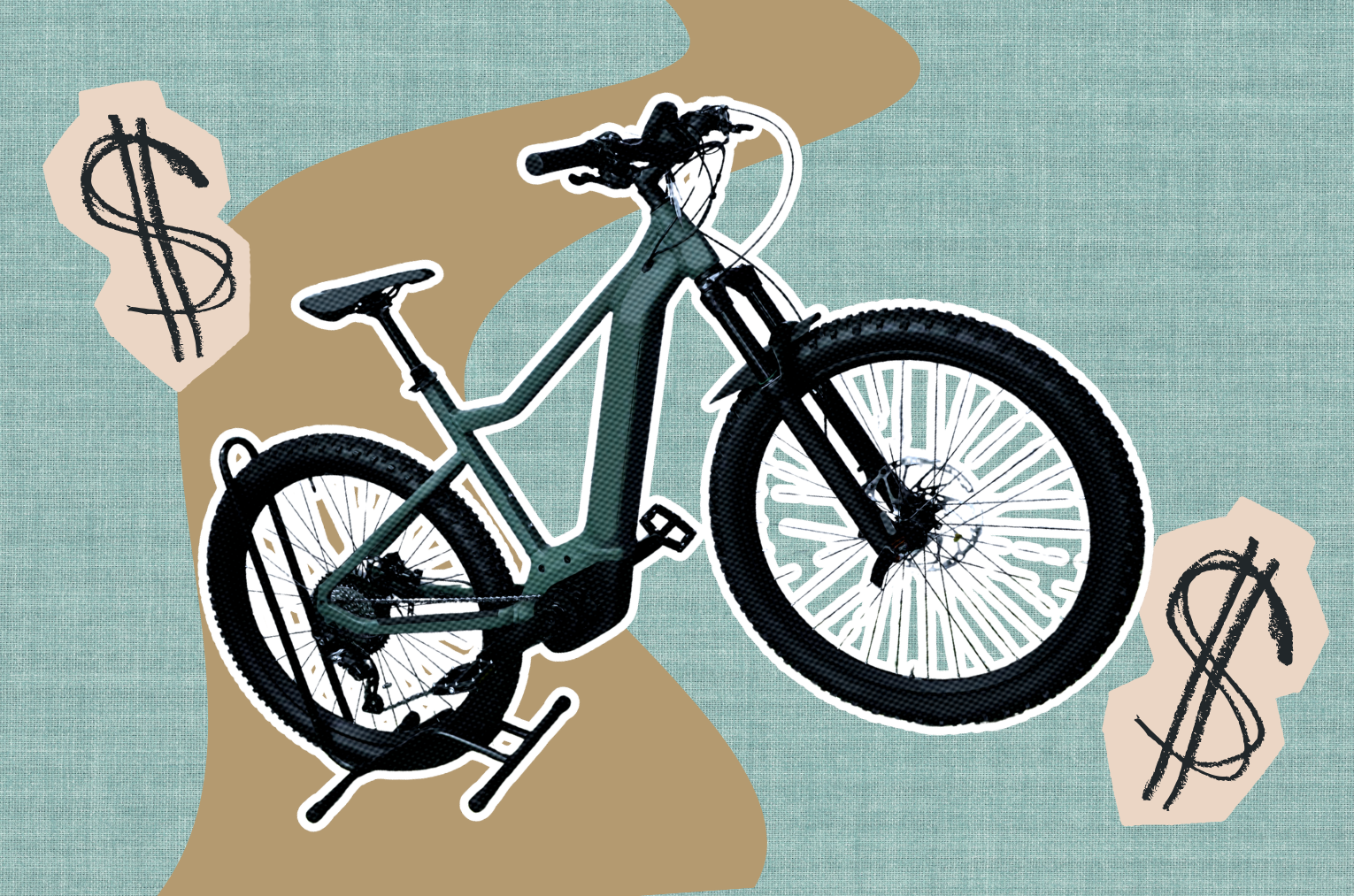
Electric bikes vary considerably in price. Our current reviews include models below $3,000 as well as e-bikes costing more than $8,000. Spending more may get you higher-quality components or a bike designed for more specialised riding, but price alone doesn’t tell you if a bike will suit your needs.
Some cheaper e-bikes between $3,000–$4,000 outperform much pricier ones in our test.
Which electric bike features do you really need?
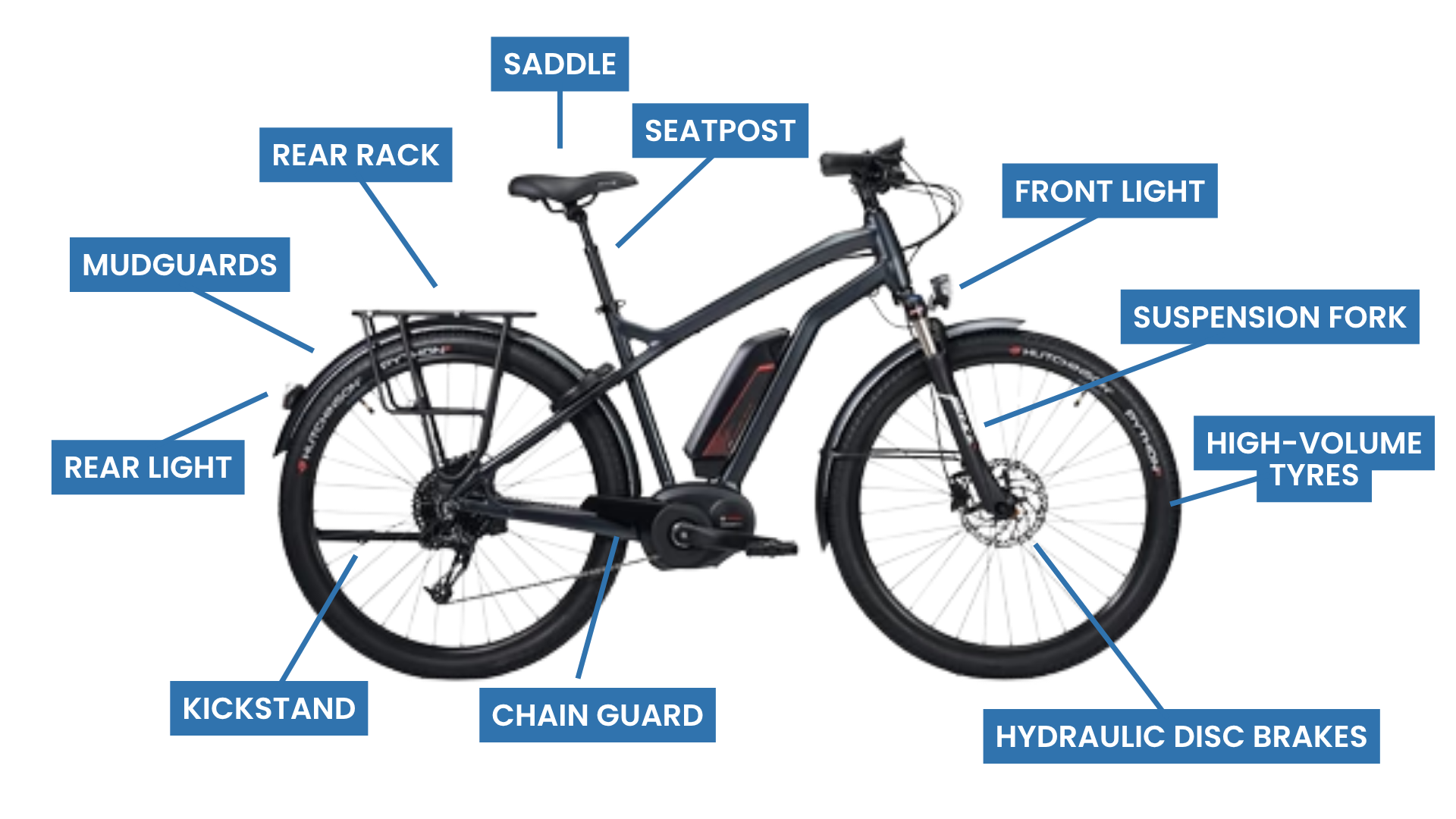
Hydraulic disc brakes
Not only are they smooth and powerful to use, they work as well in the wet as they do in the dry and are very low maintenance. Cable disc brakes can be as powerful and smooth but need more maintenance, while rim brakes don’t perform as well in the wet.
High-volume tyres with good tread
These are essential for your electric bike. Some have reflective strips in the sidewalls. A puncture-resistant lining is a good addition, as there’s no such thing as a convenient puncture.
Mudguards
They’ll protect you and your clothes from dirt thrown up by the bike’s tyres on wet roads. Look for full-length mudguards that wrap around the side of the tyre. A chain guard is useful, too, to avoid snagging your long trousers or skirt.
A rear rack
A rack lets you attach a bag to your e-bike so you don’t have to carry a load on your back. Look for a wide platform to support your load – some we’ve tested are narrow. Side frames are useful if you use pannier-type bags.
A kickstand
Just like with a normal bike, these make parking and loading an e-bike easier. Look for one mounted near the rear hub, as kickstands mounted centrally can hit the cranks and pedals when pushing the bike, and they aren’t as stable with a heavy rear load.
Fixed front and rear lights
The battery can be used to power lights. This means you won’t get caught out at dusk or dawn, and modern LED lights use so little power you can use them as daytime lights without draining the battery. Having them bolted to the bike means they’re always there when you need them and makes them harder to steal.
A comfortable saddle
These are a personal thing. You’ll generally find wider, softer saddles on more upright electric bikes and narrower, harder ones on racier models. Wide, soft saddles are more comfortable for short trips, while narrow, hard saddles are better for long rides. The only way to find out if a saddle is right for you is by riding the bike.
A suspension seatpost
Some e-bike riders like the extra comfort, while others will find the bouncing makes pedalling less comfortable. Many suspension seatposts aren’t adjustable, so check your weight will be adequately supported before deciding.
A dropper seatpost
These are becoming common on electric bikes intended for less extreme riding. A lever on the handlebar lowers the seat height, which is handy when mounting and dismounting the bike or stopping at crossings.
Our e-bike reviews note whether each bike has these features, so you can easily compare.
Where’s the best place to buy an e-bike, and what questions should you ask?
Find a local bike store that sells several e-bike brands and styles. A store that knows e-bikes will help you find a bike style and motor system that suit you – talk to a few stores selling different brands.
Test ride as many bikes as you can, trying different styles and motor systems – and not just around the car park. Take them on a ride of a few kilometres at least, typical of how you’d use your e-bike. Try them up and down hills, at speed on the flat, and around traffic and on shared paths. Some stores will rent you an e-bike for a day, refunding the rental cost if you choose to buy a bike from them.
Ask the store about maintenance and servicing. All bike shops can service a bike, but what about the motor? Ask how often the motor needs servicing, if they need to hook it up to a computer to analyse it, and whether they service it in-store or need to send it away. Also ask if they offer a free bike check-up and tune after a few months to adjust brakes and gears.
What else should you buy with an electric bike?
Before you hit the streets, you’ll need a few other items to go with your e-bike (and no, none of them are Lycra). At a minimum, you’ll need a helmet to ride legally on public roads and cycle paths. And you’ll want a good bike lock to protect your ride.
Talk to the bike store when you buy your e-bike, as it should be able to offer a good package discount on accessories.
You should also consider adding your e-bike to your home contents insurance. You need to specify the electric bike as an extra and keep proof of value. But insurance shouldn’t cost more than a few percent of your electric bike’s value. Check your policy covers your bike when locked in a public place – not just when stored at home – and it includes third-party cover when riding.
Find the best contents insurance policy
Adding an e-bike to your contents policy is the perfect time to check whether you could be paying less for insurance.
5 things to keep in mind when you start riding an e-bike
1. Get used to your e-bike before heading out on the road.
It’ll be heavier than a regular bike, so will handle differently. Start somewhere with a bit of space and experiment with the power settings to see how the bike responds when starting, stopping, turning, balancing and negotiating obstacles with different levels of assistance.
2. Be aware of your speed.
Other road users might not anticipate your speed. Scan well ahead, signal your movements and watch for cars turning into and out of driveways and side streets. If you’re keeping pace with city traffic, take up the space in your lane – this discourages unsafe overtaking when the road is narrow.
3. When starting off at an intersection or uphill, use a low gear.
You’ll need to start pedalling before assistance kicks in, so be prepared for the surge in power and acceleration when it does – drivers might not expect you to start off so quickly. Move forward to the advanced stop boxes for cyclists and position yourself to get a head start on other traffic.
4. You might find yourself passing other cyclists on busy routes.
Make sure you pass safely: look behind you for traffic and signal before pulling out. Give the other cyclist plenty of space.
5. Shared paths are for slower more relaxed travel.
Put your e-bike in a low power setting and ride at a speed that matches other users, so it doesn’t put them at risk or make them feel uncomfortable when you pass.