By Bryan Wall
Product Test Journalist | Kaipūrongo Whakamātautau Hautaonga
Are you excited by the electric transport revolution, and fed up with getting stuck in traffic jams? Not keen on cycling, even with assisted pedalling? Can't afford an electric car as a second vehicle? Well there is another option: the e-motorcycle/moped.
We road-tested 7 models to find out how they stack up.
E-motorbikes reviewed
Each bike was ridden on a route around Wellington by our test rider for 30-40 minutes, which included riding though central-city traffic, on suburban roads and up steep hills. We’ve not tried to produce full road tests of the bikes, but instead offer an insight into how well each bike performs in its intended urban environment.
Niu NQi Sport
Want to read the full article?
Thousands of expert product/service reviews
Personal support through our Consumer Rights Advice Line
Premium articles and in-depth buying advice
Add a Consumer magazine for even more exclusive content
Sur-Ron Light Bee
Lifan E3 scooter
Super Soco TC Cafe
Go Charged Velociraptor (also known as Kiwi Eco)
Ubco 2x2
Cineco City Slicker
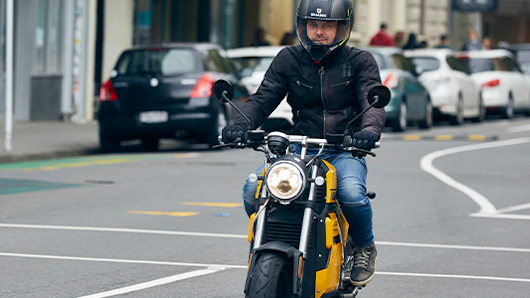
Planning to buy an e-moped?
Check out our guide to learn what to look for when buying an electric motorbike.
Buying guide
Don't know where to start? Here's our guide to buying an e-motorbike.
The basics
Motorbikes with engines no bigger than 50cc and a top speed of 50kmh are classed as mopeds and can be ridden on a car licence (even a learner’s).
This licence category has expanded in the past few years to include electric options as well. Due to the speed limits, they are suitable only for commutes that don’t involve motorway-speed roads, or even 70km/h sections.
Online is a good place to start looking for makes and models. After that, local motorcycle dealers should be your next stop. Often they will have demo bikes, as well as after-sales support and servicing, and access to parts if necessary.
Be wary of buying directly from Trade Me sellers. Do your research about the bike first because after-sales support can be non-existent.
Types of e-moped
Scooters are known also as step-through bikes. Getting on to one is as easy as stepping through the middle of the bike and sitting down. They tend to have storage space under the seat as well.
A traditional motorcycle style requires you to swing your leg over the seat. That could be tricky for those of you who wear tight pants. Usually there is minimal storage so you will likely need a backpack for your lunchbox.
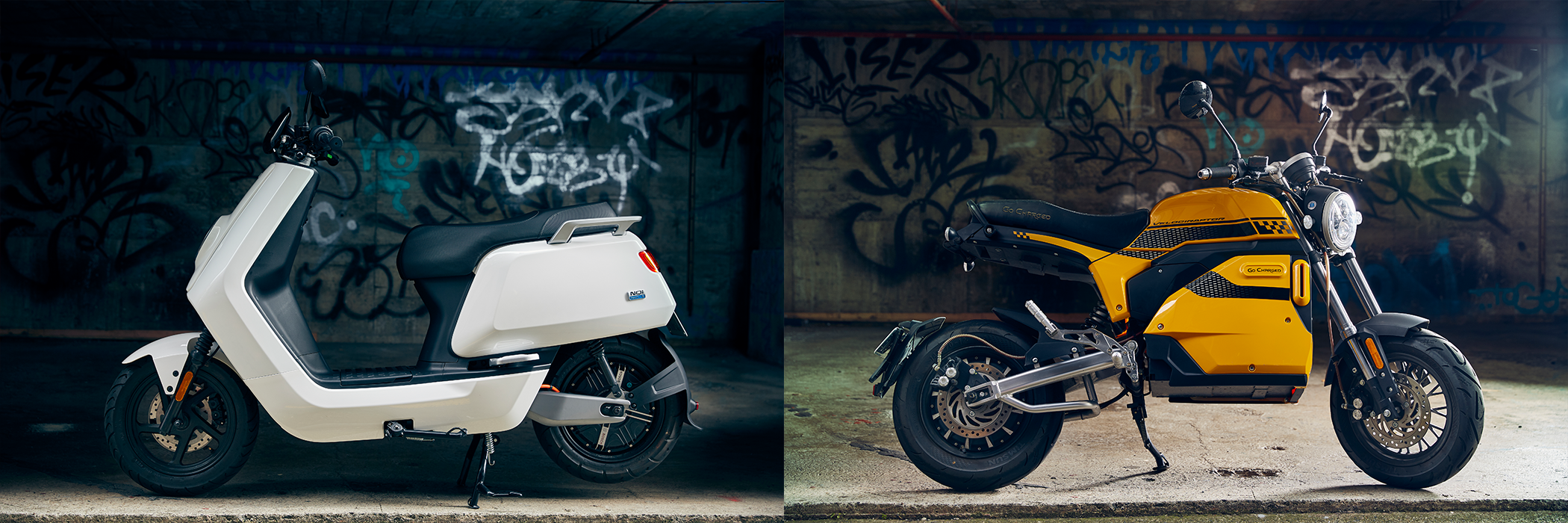
Left: e-scooter. Right: e-motorcycle.
Batteries, motors and charging
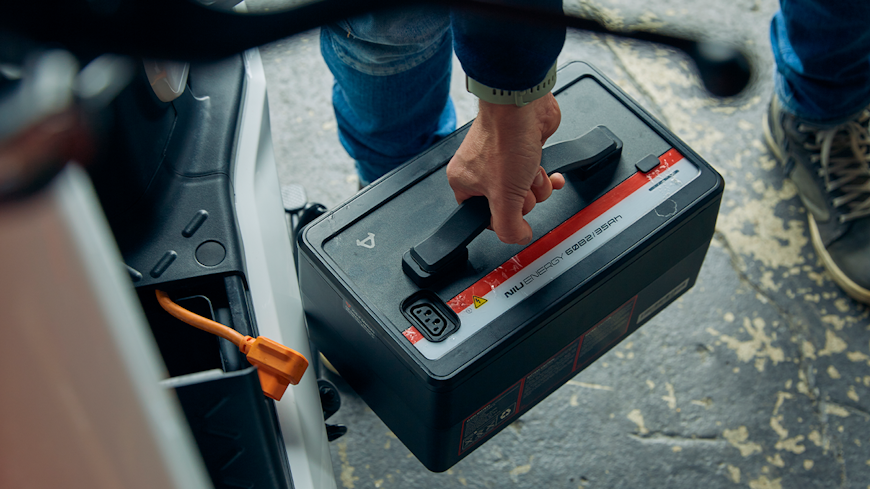
Batteries are rated in kWh or Ah; most bikes trialled have a range of 50-80km, although less if you ride up plenty of hills.
Some bikes have removable batteries, others are charged on the bike.
Batteries can be heavy – around 10kg.
Motor ratings can be difficult to compare as some are stated as max, and others as continuous. Reading our reviews and taking test rides is the best way to compare.
If you take a passenger, motor performance and battery life will be significantly worse.
Bikes are charged with normal household power points, rather than the charging station plugs that electric cars use.
Charging times vary between bikes, but most will require an overnight charge.
Brand and reliability
You might not recognise the brands that make electric motorbikes. The Yamahas, Hondas and Kawasakis of this world have yet to step into the market (despite some of them making e-bikes and e-bike motors), so the small players are all that are currently available here.
We can’t comment on the reliability of e-mopeds from these young brands. However, there is far less to go wrong with an electric motorcycle and many of the all-important motors are manufactured by well-known companies such as Bosch.
Before you ride
Protect yourself using the following:
Helmet – an approved motorcycle helmet that fits tightly.
Gloves – proper motorcycle gloves to protect your hands and keep them warm!
Boots – ideally waterproof and padded riding boots; there are also casual sneaker-style motorcycle boots available.
Jacket – waterproof and warm rider’s jacket, ideally with internal armour for elbows, shoulder and back.
Pants – waterproof rider’s pants, abrasion resistant with knee armour.
What else do you need?
Anti-theft device – chain lock or disc brake lock to protect your steed.
Safety
E-motorcycles are relatively easy to get started on, but there are still skills to be learned, to stay safe on our increasingly congested roads:
Get used to handling at low speeds, on a quiet road or carpark.
Practise emergency braking.
Many bikes have power modes so you can start on a low power until you gain enough confidence to hit the high gear.
Practise hill starts – starting off uphill on some of the bikes we trialled can be tricky as the motor cuts out when the rear brake is applied, making it easy to roll backwards.
Consider taking a course – ACC provides subsidised Ride Forever courses. There is an Urban/Commuter or Scooter Survival course that gives you four hours of training for just $20, which will likely be the best $20 you’ll ever spend. Ride Forever also offers more advanced courses. For more information, head to www.rideforever.co.nz.