If I said you could make your clothes dryer more energy efficient and reduce drying time, just by throwing a couple of wool or rubber balls in with your wet clothes, you’d probably think it sounded too good to be true. And you’d be right.
Wool Dryer Balls ($20, three-pack) are tightly woven woollen balls and the Amazing DryerBalls ($22, two-pack) resemble spiky plastic dog toys. They both claim to speed up the drying cycle and thereby reduce energy consumption, while softening clothes and getting rid of static build-up.
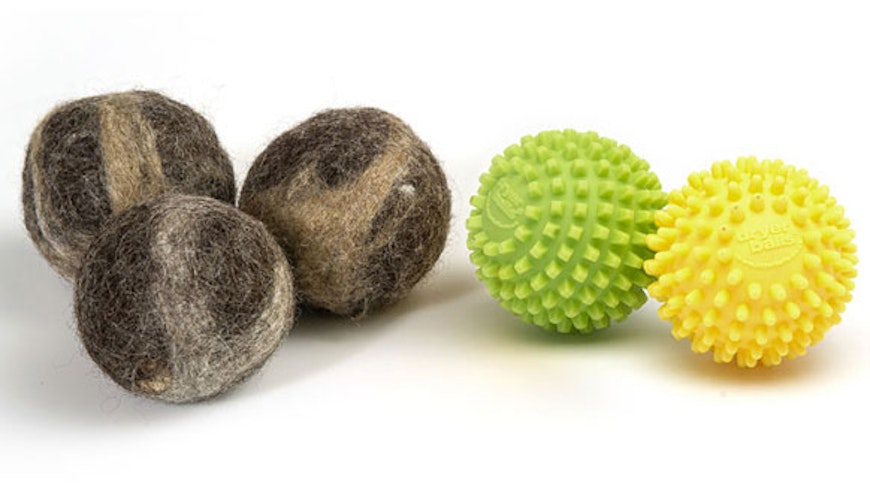
Wool Dryer Balls (left) and Amazing DryerBalls (right).
To establish baseline figures for drying time and energy consumption, we put a freshly washed 3.5kg load through our test dryer, a Miele condenser model with automatic sensing (meaning it switches off when the load is dry). Then, we dried the same load with each set of dryer balls.
We found drying time increased by three to four minutes for both the plastic and woollen dryer balls, which meant the dryer used almost five per cent more energy per load. This flies in the face of claims they reduce drying time while increasing energy efficiency.
We also didn’t observe any improvement in softness or reduction in static when using the balls, which both manufacturers also claimed.
These disappointing results follow last year’s test of laundry balls and soap nuts, which demonstrated they don’t come close to the performance of conventional detergent and in most cases were equal to washing with plain water.
The most efficient way to dry your washing is on an outdoor washing line. But if you use a clothes dryer, you can make sure you’re getting the best out of it by:
choosing a dryer with a high Energy Rating (and using our test results)
cleaning your lint filter after every load
wiping the drum with white vinegar or stainless steel cleaner every few months to keep the sensor in good working order
emptying the water reservoir in condenser and heat pump dryers after every load (or better yet plumbing it directly into a drain)
if you’ve got a vented dryer, making sure the vent is clear of dust or debris.
First Looks are trials of new or interesting products from the perspective of our product experts. Our lab-based tests offer truly objective product comparisons.
By George Block.