By Belinda Castles
Researcher | Kairangahau
A ready-to-drink iced coffee is a refreshing way to get your caffeine fix when the weather is hot. But some are high in sugar and there’s a big range when it comes to caffeine content. Some products have more caffeine than a double shot espresso and more than three times the caffeine in a cup of instant coffee.
This summer I’ve been swapping my regular flat white for an iced coffee. There’s no shortage of options. From long blacks to mochas, there are iced brews to suit most coffee palates. There’s also iced coffees pumped up with protein.
But how healthy are these ready-to-drink iced coffees in a can, bottle or carton? We checked out 37 products to find out.
The drinks we looked at ranged in size from 220ml to 600ml. To enable a fair comparison, we compared the nutrition information per 250ml (about one cup).
However, if you drunk some of the larger-sized ice coffees in one go, you’d be getting a super-sized hit of sugar and caffeine.
When it comes to sugar and caffeine content, there’s also a big range. It pays to check the nutrition information panel if you’re drinking ready-to-go iced coffees often.
What’s in the coffees
Sugar
Milk naturally contains the sugar lactose (about 11g/250ml). But of the 37 products in our survey, 28 also had added sugar, three had an intense or artificial sweetener, and two had both.
The World Health Organization recommends free or added sugars should make up less than 10% of your daily energy intake – less than 5% is suggested for better health. For an adult, 5% is about 25g of sugar.
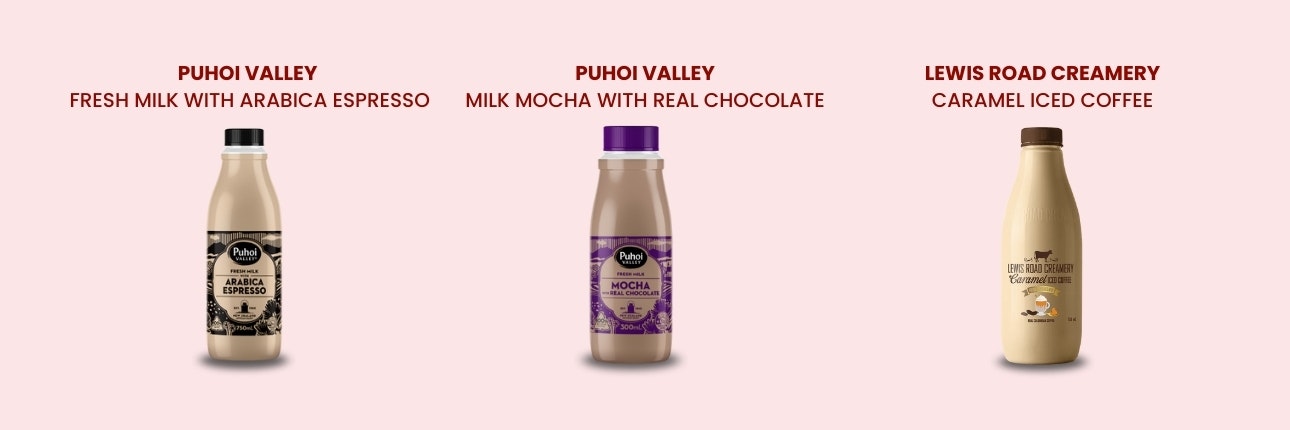
Lewis Road Creamery Caramel Iced Coffee, Puhoi Valley Fresh Milk with Arabica Espresso and Puhoi Valley Fresh Milk Mocha with Real Chocolate had the most sugar of the iced coffees we surveyed. Per 250ml, all had more than 20g of sugar. That’s approximately 6 teaspoons of sugar in a 250ml glass.
The two Nippy products we looked at contained 20g per 250ml. But if you drank the entire 500ml serving size these coffees come in, your sugar hit will be approximately 10 teaspoons!
Some of the sugar in these products comes from naturally occurring lactose, and food labelling rules don’t require added sugars to be listed separately. Of the products that contained added sugar, only eight products in our survey stated the lactose content. Puhoi Valley, Lewis Road Creamery and Nippy’s didn’t provide this information when we asked for it.
Highest sugar content
Puhoi Valley Fresh Milk with Arabica Espresso – 25g per 250ml includes lactose
Puhoi Valley Fresh Milk Mocha with Real Chocolate – 24g per 250ml includes lactose
Lewis Road Creamery Caramel Iced Coffee – 22g per 250ml includes lactose.
Puhoi Valley’s mocha iced coffee contains 11% real chocolate, and the other two products contain cream. That gave these drinks a higher energy content (as well as a high sugar content) than the other milk-based coffees we surveyed.
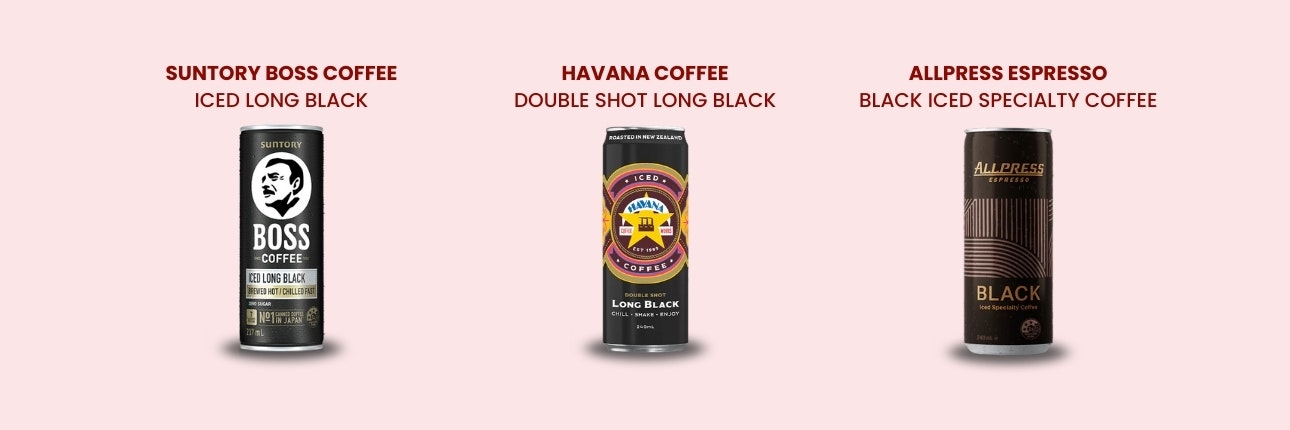
If you’re trying to cut your sugar intake, your best option is a black coffee variety. The three black iced coffees in our survey all had 0g of sugar.
Lowest sugar content
Suntory Boss Coffee Iced Long Black – 0g per 250ml
Havana Coffee Double Shot Long Black – 0g per 250ml
Allpress Espresso Black Iced Specialty Coffee – 0g per 250ml.
Caffeine
The caffeine fix of the drinks we surveyed ranged from 20mg to 240mg per 250ml.
In comparison, a cup of instant coffee contains about 80mg and a double-shot espresso coffee 210mg. A 250ml can of an energy drink like Red Bull or V contains 80mg.
Drinks from five brands (Suntory Boss Coffee, Havana Coffee, The Man Shake, Nippy’s and Tararua) didn’t state the caffeine content on the packaging. Suntory Boss and Tararua provided this information when we asked for it – the other companies did not respond.
The Food Standards Code requires added-caffeine products to have a statement on the label that they contain caffeine. Food with guarana (a plant with high levels of natural caffeine) must also be labelled as containing caffeine. But these products don’t have to disclose how much caffeine they contain – just that it’s in them.
There’s a restriction on how much caffeine can be added to cola soft drinks and energy drinks but not iced coffee products.
We think all caffeine-containing drinks should disclose their caffeine content.
Highest caffeine content
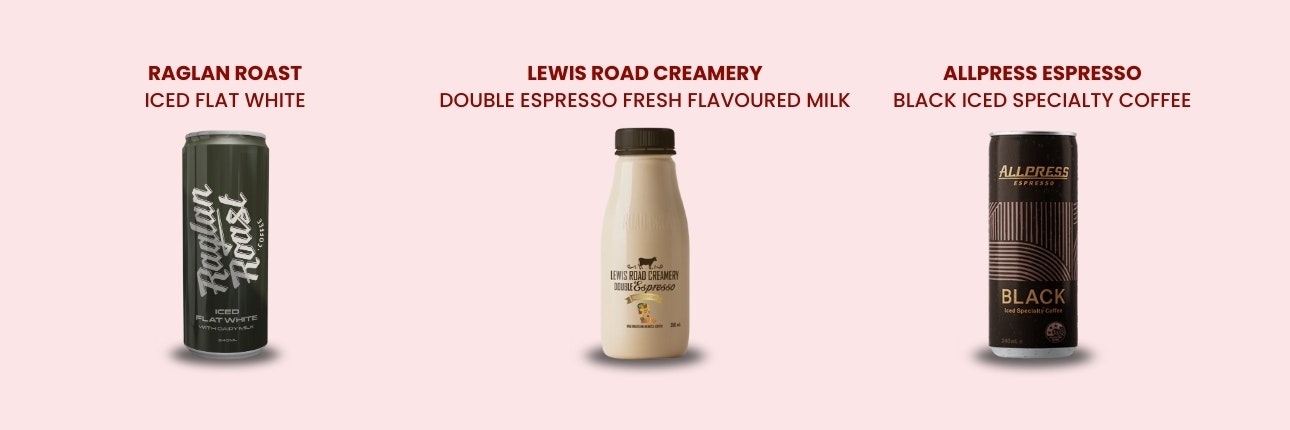
Raglan Roast Iced Flat White – 240mg per 250ml
Lewis Road Creamery Double Espresso Fresh Flavoured Milk – 238mg per 250ml
Allpress Espresso Black Iced Specialty Coffee – 170mg per 250ml.
Lowest caffeine content
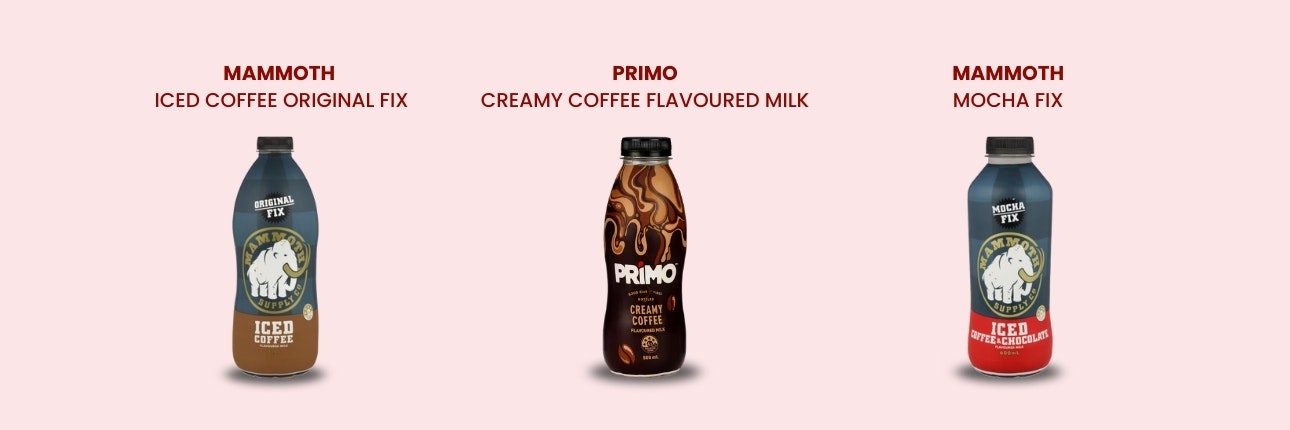
Mammoth Iced Coffee Original Fix – 20mg per 250ml
Primo Creamy Coffee Flavoured Milk – 20mg per 250ml
Mammoth Mocha Fix – 20mg per 250ml.
All about caffeine
Caffeine occurs naturally in foods such as coffee, tea and cocoa. It’s a mild stimulant and in small doses can make you feel more alert and awake.
But some people are sensitive to caffeine and having too much can cause:
jitteriness
trouble sleeping
high blood pressure
irritability
increased bowel movements.
Caffeine can also interact with certain medicines, including:
antidepressants
antipsychotics
medications for your heart or thyroid.
Health NZ says most adults can handle up to 400mg of caffeine per day. That’s equivalent to about six cups of tea, five cups of instant coffee or two double-shot espresso-style coffees. The agency recommends pregnant or breastfeeding women limit their intake to no more than 200mg per day.
It’s best for children and young people to limit the amount of caffeine they consume, especially from energy drinks and soft drinks that also have a lot of sugar.
There’s no safe caffeine limit advised for children. However, a Food Standards Australia New Zealand Working Group concluded there was evidence of increased anxiety levels in children at intakes of about 3mg of caffeine per kilogram of bodyweight per day. For children aged 9 to 13 years, this corresponds to about 120mg per day.
Added-protein iced coffees
Four of the iced coffees we surveyed also made protein claims:
Anchor Protein + Iced Coffee Shake
Mammoth 45g Protein Fix Iced Coffee Original
Rokeby Protein Smoothie Double Espresso
The Man Shake Fuel High Protein Health Shake Iced Coffee.
When we investigated protein claims on ultra-processed foods last year, we found some protein claims are more about hype than health.
The nutrition expert we spoke to said protein claims on ultra-processed foods can create a health halo; they make the food appear healthier than it is.
The 4 protein-fortified drinks are higher in protein than the other drinks we surveyed. Anchor Protein + had the highest protein content.
For the other nutrition values we surveyed, Mammoth Protein Fix had the highest sugar content of these four added-protein coffees. However, the drink’s nutrition information panel did state the lactose content – 69% of the total sugars came from this naturally occurring sugar in milk.
The Man Shake Fuel and Anchor Protein + iced coffees didn’t contain added sugars, although the Man Shake product contains the intense sweetener sucralose. This product also didn’t disclose its caffeine content.
Rokeby Protein Smoothie Double Espresso had the highest caffeine content at 70mg/250ml.