By Belinda Castles
Researcher | Kairangahau
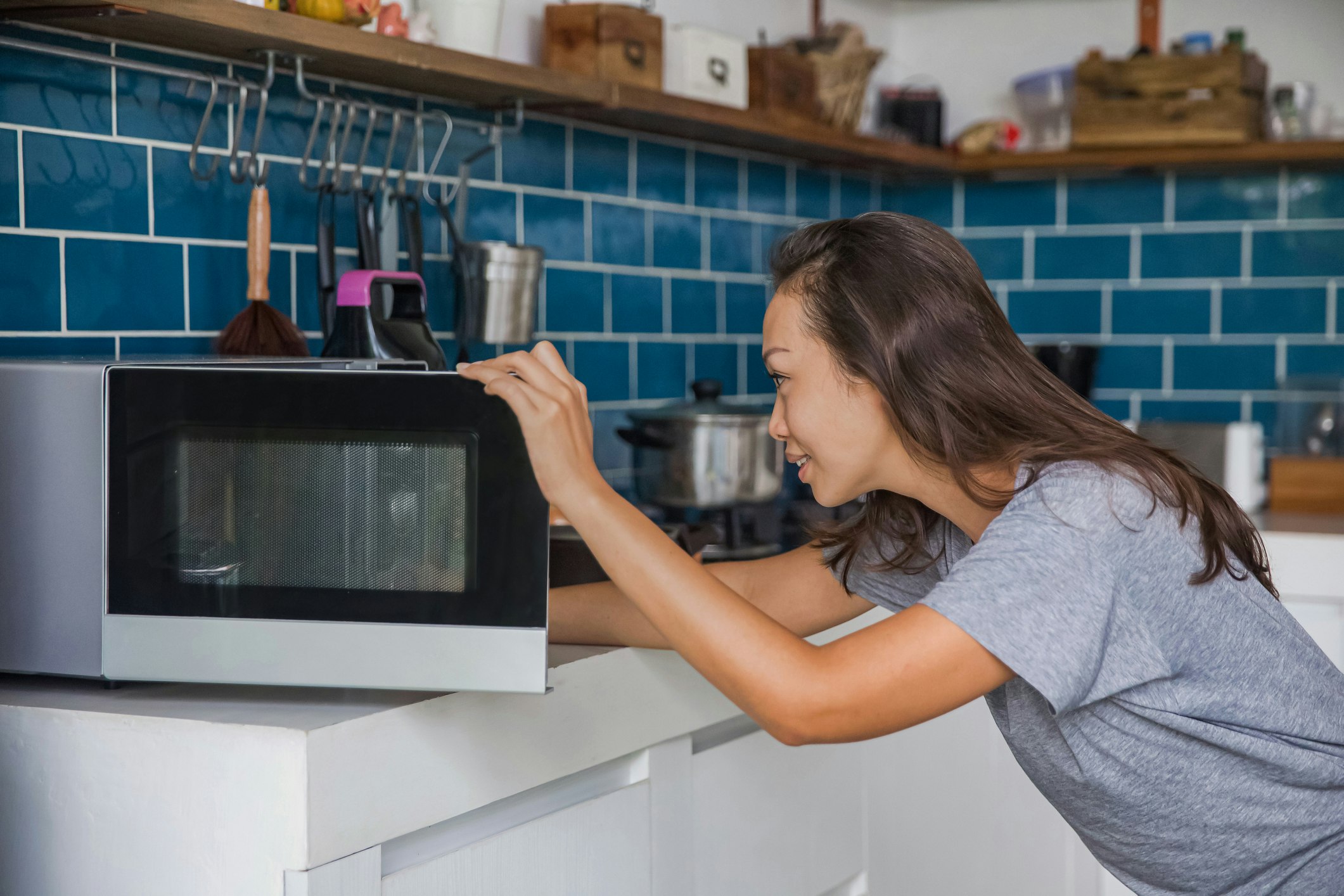
Most people don’t get the most out of their microwave and only use a few functions. Reading your microwave’s manual, and a bit of trial and error, will give you a new perspective on what it can do. Here’s how to get the most out of your microwave.
Suitable cookware
For microwave cooking use glassware, such as Pyrex, and heat-resistant plastic containers that are microwave-safe. China, pottery, earthenware and ceramic containers are also suitable if they are non-porous and don’t have a metal trim.
For the convection or grill setting, the cookware you’d use in a regular oven is fine. It’s the combination setting where things get tricky. You can’t use metal, non-heat-resistant plastic or anything not microwave-safe. Stick to Pyrex-style glassware, and microwave- and oven-safe china pottery, earthenware or ceramic cookware.
Heating food evenly
Uneven heating – cold and hot spots – are common in a microwaved meal. It’s important to stir your food part-way through cooking or let food stand. Standing gives the heat time to distribute evenly through the food. This is particularly important for solid or dense dishes, such as lasagna or quiche, which can’t be stirred.
Improving taste and appearance
Microwaving is great for fresh vegetables because you need less water, which can dilute the natural flavour. Shorter cooking times can also help retain flavour.
A downside to microwave cooking is some foods fail to brown. If your microwave doesn’t have a grill, try basting with seasonings such as soy sauce.
Nutrition
Microwave cooking is comparable to steaming or baking. It’s more nutritious than boiling as nutrients aren’t lost in the water.
Heating infant milk
Babies have been severely scalded by milk heated in a microwave. Always let the milk stand for at least 20 seconds, shake it well and test it first.
Never overheat breast milk as it can coagulate (curdle) at high temperatures, causing loss of quality and nutritional value.
Safe defrosting
If you’re defrosting a whole chicken in the microwave, put it on a microwave-proof rack so the meat doesn’t sit in the thawed ice and start to cook.
Don’t defrost meat in its wrapping.
Don’t let the meat get warm and/or brown during defrosting.
After defrosting, leave meat to stand so it can reach a uniform temperature. For mince that’s about 10 minutes; for a whole chicken 15 minutes.
Meat defrosted in the microwave should be cooked immediately. Never refreeze raw meat that’s been defrosted. It’s OK to freeze it after it’s been cooked.
Cleaning
A convection microwave should be cleaned each time you use the convection or combination setting. If you don’t, any grease or food residue will be baked on next time you use it and be difficult to remove.
Safety advice
Water can heat past its boiling advice without bubbles forming. This is called “superheating”. When you move the cup or add coffee, the water can explode into steam and cause scalding.
To reduce the risk of superheating:
Use a wide-mouthed container. Avoid using a straight-sided container with narrow neck.
Let the container stand for 20 seconds after heating.
Add sugar or instant coffee before heating.
Eggs can also superheat and explode in their shells or during poaching. It’s best to not cook eggs in the shell, or prick yolks before cooking.
Microwave ovens
We’ve tested standard microwave, models with a grill, and convection microwaves that can grill and bake.