By Kate Harvey
Content Manager | Pou Whakahaere Ihirangi
Roll-Ups, those chewy treats that ‘90s kids will remember having in their school lunchboxes, are back on supermarket shelves.
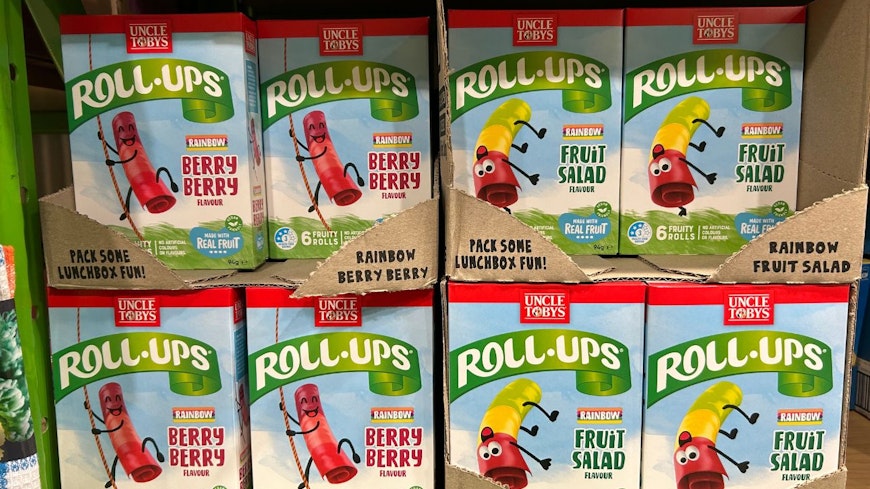
You’ll find Roll-Ups in the lunchbox snack aisle, surrounded by a growing number of similar ultra-processed “fruit” snacks.
But does “fruity” mean they’re healthy?
When we compared a selection of the "fruit" snacks available, Roll-Ups had the lowest sugar content per 100g of those we looked at. Roll-Ups have about 26g of sugar per 100g, while all the others had more than 50g per 100g. Each Roll-Up has about 4g of sugar in it – the equivalent of about a teaspoon.
The main ingredient in Roll-Ups is corn maltodextrin, a powdered carbohydrate that’s often used as a thickener in processed foods. The next ingredient is concentrated fruit puree followed by sugar and a number of other ingredients including fruit juice concentrates and vegetable oil.
Consumer NZ’ s food and health writer Belinda Castles said that while the sugar content was lower than other "fruit" snacks, there was nothing nutritious about Roll-Ups.
“Despite the claim they're “made with real fruit”, concentrated fruit purees, as well as fruit juice concentrates, bear little resemblance to the fruit they're derived from. They provide the sweetness without the fibre you get from eating a whole piece of fruit.”
The stickiness of these treats also makes them bad news for teeth. Even dried fruit like raisins and bliss balls that don’t contain added sugar contain a lot of natural fruit sugar and stick to kids’ teeth.
“Eating healthy food helps children concentrate and learn, so a nutritious lunch is important. I don’t think you’re getting that from any of these ultra-processed foods,” Belinda says.
Instead, you’d be better off sticking to whole fruit – it's just as convenient, cheaper and nutritious. You're also sending less packaging to landfill when you choose whole fruit.
Wondering what else to put in your child’s lunchbox? Belinda has compared lunchbox snacks, such as bars, biscuits, chips and crackers, on their saturated fat, sugar and salt content.
Can you boost your immunity with fortified food or dietary supplements?
We checked out a range of products making immunity claims to see whether they stack up.