Consumer NZ analysis of the April 1 electricity price rises shows large differences around the country, and those getting hit the hardest can least afford it.
“The impact of the increases vary across the country,” says Paul Fuge, Manager of Powerswitch.
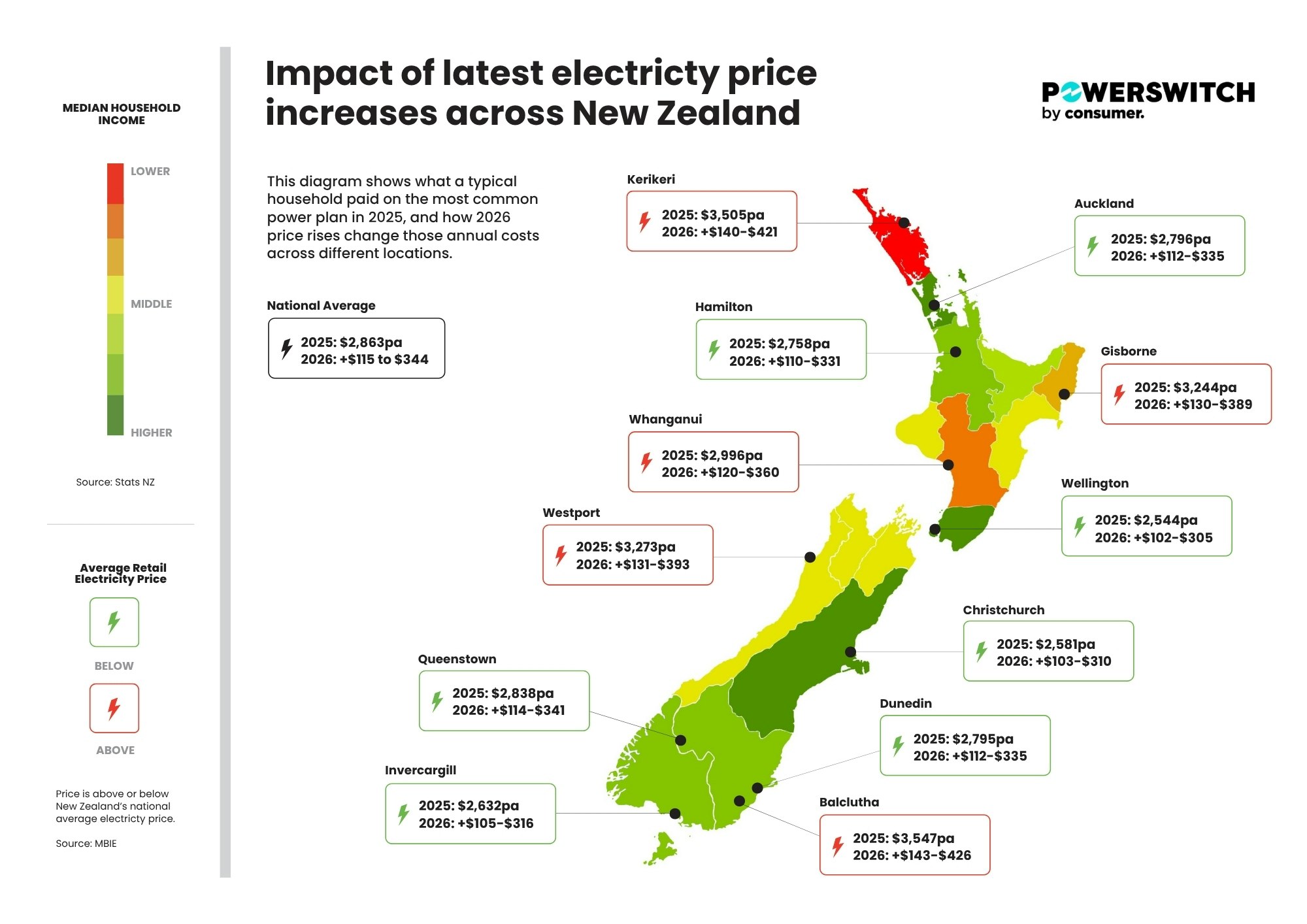
“In the Far North we found annual cost increases in the range of $140 to $420. While in Wellington, the same household can expect an annual increase of $102 - $305.,” says Fuge.
Kerikeri currently has amongst the highest average electricity prices in the country, around 20% above the national average and 32% higher than Wellington. Even before the latest increases, households in the Far North were paying hundreds of dollars more each year.
“Unfortunately, the biggest increases are often landing in areas where prices were already high and incomes are lower, worsening energy hardship,” says Fuge.
Residential power prices increased by around 12% in 2025 and are rising again by an average of 5–10% nationally this year, but what households see on their bills can vary more than that.
“There is no single ‘power price increase’. Our analysis of the Powerswitch pricing data reveals very different impacts for similar household types across the country with many people unknowingly paying much more than they need to.”
Consumer NZ analysed 936 of the most common electricity plan types across 14 retailers and multiple pricing regions. We found that annual increases ranged from around 4% to 12%.
“Headline averages hide what really matters, which is what happens on your own power bill,” says Fuge. “And the differences between plans and regions are far bigger than most people realise.”
For a typical household consuming the average amount of electricity, this means an increase of between $115 and $344 per year.
Despite the rises, Consumer NZ says households can still take action. Prices may be going up, but how much more you end up paying is not out of your control. The key is making sure you’re on the right plan - and the easiest way to do that is by checking Powerswitch.
With around 12,500 pricing plans tracked on Powerswitch, switching can significantly reduce costs.
“Don’t wait for a winter bill shock,” said Fuge. “Check Powerswitch now! Just a few minutes could save you hundreds of dollars a year.”

Are you paying too much for power?
We'll help you compare and find the best electricity and gas plan. Check now to see if you’re getting the best deal.