When your international flight is cancelled or delayed, it’s important to know what your rights are. Find out about your rights under the Montreal Convention and other protections to see if you’re entitled to make a claim with the airline.
Need some personalised advice? Consumer NZ members can contact our Advice Line – our advisers will help you understand your legal rights.
If you’re travelling between countries – or taking a domestic flight that is part of an international itinerary – and your flight is disrupted, more than one set of rules may apply (but you can’t claim twice for the same loss).
Most countries are party to the Montreal Convention, an international agreement that lays out some passenger rights.
You may have additional protections under local laws if flying in places such as the EU, UK, or USA. Australia is also expected to introduce new rules in 2026.
When the airline may be liable
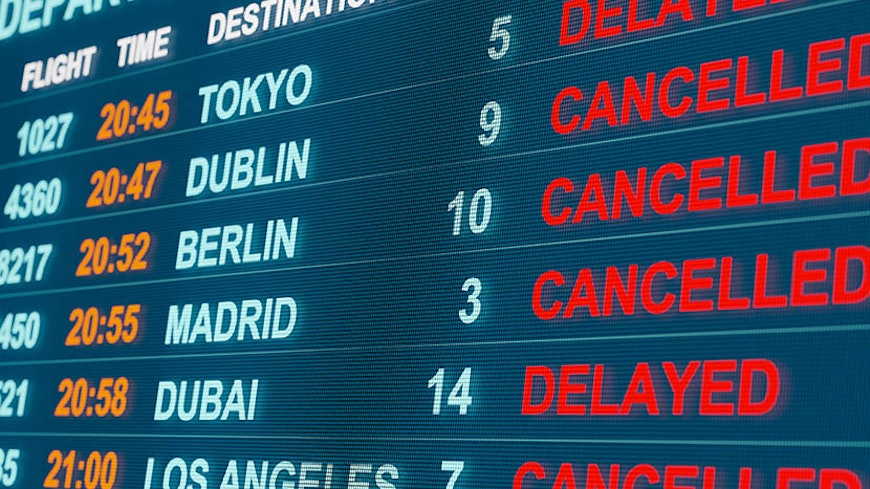
If the disruption was caused by something the airline could reasonably have avoided (such as mechanical problems, staffing issues, operational mistakes or overbooking that delays your arrival), the airline may be liable for the costs you incur due to the disruption, under the Montreal Convention.
This could include reimbursement of your reasonable expenses (such as meals, taxis, accommodation), as well as a refund or rebooking.
The maximum amount you can claim is about NZ$15,000 per passenger, depending on exchange rates (6,303 Special Drawing Rights under the Montreal Convention). Keep your receipts to support your claim.
Note: You are expected to act reasonably! For example, if your flight is only delayed by 10 minutes, you can’t demand a refund. And if you’re forced to stay somewhere overnight due to a disruption, you won’t be able to claim back the cost of a luxury hotel unless that was the only accommodation available.
When the airline may not be liable
If the disruption was caused by something the airline could not reasonably have avoided (such as extreme weather, air traffic control restrictions or security threats), the airline is unlikely to be liable under the Montreal Convention.
Your options depend on your airline’s terms and conditions. In most cases:
Airlines will offer you a credit or rebook you on the next available flight. If that flight time doesn’t suit you, you can ask about alternative options.
If you booked refundable fares, you can ask for a refund, but the refund could take time to process.
Additional costs, like accommodation, meals or taxis, are generally not covered.
If your circumstances change and you can no longer take a flight that you’ve booked, your options depend on your fare type. Refundable fares allow refunds, while non-refundable fares usually allow credit or changes, sometimes with fees. If you’re not sure, ask the airline or the agent you booked through.
If you’ve purchased international travel insurance, check the policy to see what it offers.
Had a bad experience with an airline?
Take a few minutes to tell us about your airline experience. Your complaint helps build the evidence we use to raise issues with airlines and push for clearer passenger rights.
Your flight rights in the EU, the UK and the USA
Alongside the Montreal Convention, some parts of the world have added protections for air passengers. More than one set of rules may apply to the same disruption, but you cannot recover the same loss twice.
EU and UK passenger rights
If your flight departs from the EU or UK, or arrives there on an EU or UK airline, you may have rights under EU passenger protection laws. These rights apply alongside the Montreal Convention but operate differently.
Under EU and UK rules, you do not have to prove financial loss.
If your flight is cancelled, you are generally entitled to choose between:
a replacement flight to your destination
a return flight to your original departure point
a refund of your unused ticket.
If your flight is significantly delayed or cancelled, airlines must also provide assistance while you wait. This can include meals and refreshments, communication access and hotel accommodation and transport, where needed.
In some cases, passengers may also be entitled to fixed compensation for delays or cancellations. However, compensation is not payable if:
the airline can show the disruption was caused by “extraordinary circumstances” outside its control - such as severe weather or air traffic control restrictions
passengers were given sufficient notice of the cancellation, usually more than 14 days before departure.
The EU has a tool that can tell you what your rights are depending on your situation.
United States passenger rights
If your flight is cancelled or significantly changed for any reason – whether or not it’s the airline’s fault – and you choose not to travel, you are entitled to a full refund, even on a non-refundable fare. If you still wish to travel, airlines will usually rebook you on the next available service.
US law does not generally require compensation for delays, but some airlines may provide assistance such as meals, hotel accommodation or travel credits.
If you are denied boarding due to overbooking, you may be entitled to compensation of up to four times the cost of your one-way fare, currently capped at around US$2,150, depending on the delay to your arrival.
How to make a claim
Contact the airline and ask if you’re entitled to claim back anything more under the applicable laws.
If an airline rejects your claim or you’re not satisfied with its response, you may be able to escalate the complaint to the relevant regulator, consumer protection agency, tribunal or alternative dispute resolution scheme, where applicable.

Need our help?
If something’s gone wrong with a product or service, our Consumer Rights Advice Line experts can help you get a fair deal. Get personal, practical advice you can trust – included when you join from $15 a month.