By Kate Harvey
Writer | Kaituhi
Buying a bed is a big investment. Get it wrong and you could be losing sleep - and not just because you wasted your money.
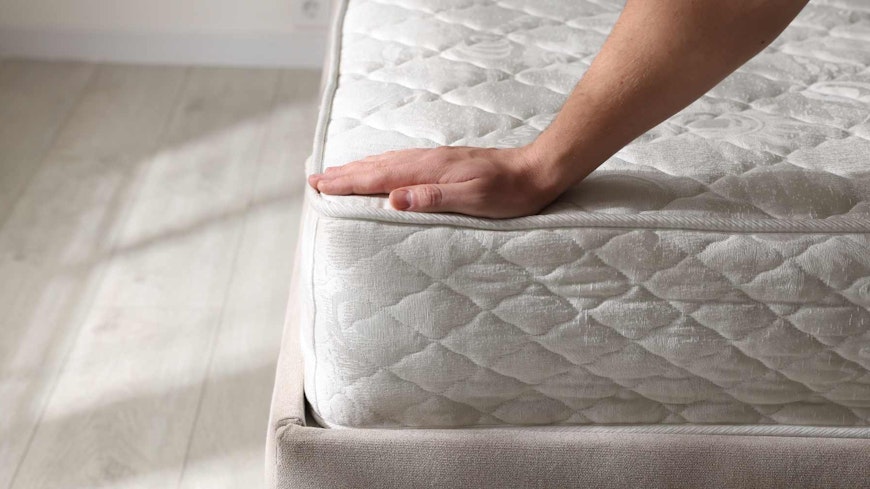
Our bed-buying guide can help you find the perfect mattress for a restful night’s sleep. It includes the results of our mattress survey, which thousands of New Zealanders took part in. They told us about the mattresses they’ve bought from brands including SleepMaker, Sleepyhead, Sealy, Ecosa, Ikea and Living & Co over the past five years. As a result, we’ve given our People’s Choice award to the three brands behind the best mattresses in New Zealand.
On this page
- New Zealand’s three best mattress brands
- Understanding mattress type: inner-spring, memory foam, latex or bed-in-a-box
- Inner-spring mattresses
- Memory foam mattresses
- Latex foam mattresses
- Bed-in-a-box mattresses
- Futons
- How long should a mattress last?
- Which bed base should you choose?
- What to remember when you go mattress shopping
- How to test a mattress in the shop
- Back problems? Consider these points
- How to keep dust mites away from your mattress
- Buying a bed for kids
New Zealand’s three best mattress brands
More than 2000 New Zealanders told us about the mattresses they’ve bought over the past five years. This information has let us calculate reliability and satisfaction scores for those brands that had more than 30 responses.
Understanding mattress type: inner-spring, memory foam, latex or bed-in-a-box
There are several types of mattress. There’s no evidence that any one type is better than another, and one person’s comfort level is another’s recipe for a nightmare, so you need to find one that works for you.
Inner-spring mattresses
With inner-spring mattresses, springs support your body and layers of padding provide the comfort. The number, shape and distribution of the springs, the number of turns, and the strength of wire in the springs all influence how much support the mattress gives and how long it will last.
Springs: mattresses may have individual springs housed in fabric pockets, a system of springs joined with crosswires or a continuous coil woven out of a single length of wire. A layer of natural or synthetic fibre lies over the springs, which prevents you from feeling them and protects the comfort layers.
If you and your partner are very different weights or disturb each other while sleeping, look for a mattress with individual springs, to reduce the ripple effect or any roll-together. Another option is a mattress with two continuous coil units side by side, separated by a foam divider.
Some mattresses provide extra support along the sides of the bed, which may help them last longer. Some provide more support in zones where there’s likely to be more pressure, such as around your hips.
Padding/comfort layer: this is the layer between you and the springs. It determines how hard or firm the mattress feels against your body. Padding might be made up of polyester fibre, wool, polyurethane foam, viscoelastic or latex. Lower grades of foam break apart more easily and may lose their ability to spring back.
Pillow top: an extra layer of cushioning that moulds to the shape of your body.
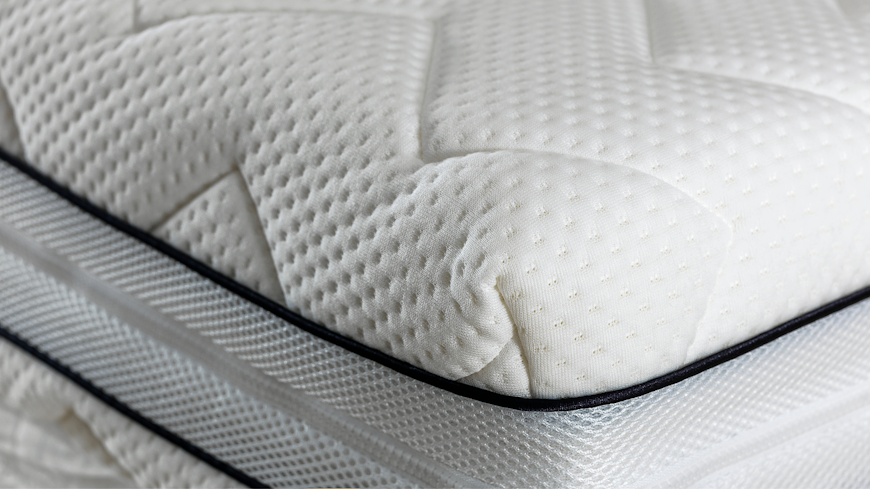
Outer mattress cover: cheaper, less durable mattresses will probably have a flat cotton cover. More expensive mattresses tend to have a quilted cover. The quilting determines the feel of the surface. If the design is small and close the bed will feel firmer, while a larger pattern will feel more cushioned.
How to look after your inner-spring mattress: manufacturers recommend flipping and turning a mattress regularly to prolong its life and flatten out indentations. However, many people will find this too much of a hassle, especially if the mattress is too heavy to lift. Single-sided mattresses don’t need flipping but should be turned head to foot several times a year. At the least, you should air the mattress regularly (at least weekly) and vacuum it from time to time. Use a mattress protector to keep it clean.
Tip: when flipping your mattress, don’t use the handles at the side to support its full weight – they may pull out. They’re intended for repositioning the mattress.
Memory foam mattresses
Memory foam mattresses are topped with a layer of temperature-sensitive viscoelastic material or memory foam. The best known is TEMPUR, a material originally developed by NASA.
As it’s a type of foam, you should sink into it and feel your weight absorbed. This takes pressure off your joints and increases circulation. The greater the foam density, the greater the durability.
Latex foam mattresses
Natural latex mattresses use rubber, a renewable resource from plantations. Some brands claim to be good for allergy sufferers, as they harbour less dust than other mattress types and have been treated to inhibit the growth of bacteria, mould and dust mites.
Latex mattresses are heavy, but you don’t need to turn them. Another option is a latex overlay, which can be used with a firm inner-spring mattress.
Bed-in-a-box mattresses
Packaged vacuum-sealed, bed-in-a-box mattresses are a convenient way to buy a cheaper mattress. When opened, the mattress expands into its full size.
These mattresses used to be the domain of online retailers, but now you can buy them from the likes of Freedom and Harvey Norman.
When they first came out, boxed mattresses were made up of different foam layers but now some companies combine foam with pocket springs. When we previously tested them, we found the foam versions got softer over time. Spring mattresses usually get firmer, because the metal springs tend to get stiffer.
Futons
Futons are versatile. Some can be folded up for use as seating then unfolded as a bed. The cheapest futons are filled with layers of cotton wadding and provide a relatively hard sleeping surface. Futons with alternating layers of wool, and sometimes latex, provide more comfort.
You’ll need to keep the fillings well ventilated and fluffed up. Futons should be aired and turned weekly to avoid mildew.
Futons should only be used on a flat slat base of unvarnished wood (varnished slats don’t allow moisture to escape).
How long should a mattress last?
We think you should expect an innerspring mattress to last 10–15 years. Memory-foam and latex mattresses you’re likely to get more life out of – at least 15 years. A futon we think you should expect to replace every 5–8 years, depending on how much you use it.
Which bed base should you choose?
There are a few things to consider when you’re buying a bed base.
Platform bases
A platform base is a wooden box with a board across the top and an upholstered fabric outer. Platform bases from king size up are usually split in two so they can fit through doorways and up stairs. Some brands offer drawer bases, which provide handy extra storage.
Slat bases
Slat bases are easily dismantled and moved, allow maximum airflow around the mattress, and come in different styles to match your other bedroom furniture. They’re also durable – a slat base could last you a lifetime.
There are 2 types – fixed and flexible. Fixed slats attach straight to the frame and have no give. They’re the cheaper option and are fine for inner-spring mattresses and futons. Flexible slats are closer together to support the mattress.
What to remember when you go mattress shopping
Shop around! Mattresses are often on sale, or you may be able to negotiate a discount. Before hitting the shops, check company websites to narrow down your options.
Don’t get sucked in by sales jargon. For example, the term “orthopaedic” is meaningless unless it comes with accreditation from a proper medical association.
Ask about trial periods. Some manufacturers and retailers provide a “comfort guarantee” and allow customers to exchange a mattress if it’s returned in its original condition. Terms and conditions vary between retailers – you’re usually given between 14 and 30 days to make up your mind. It’s a good idea to have this in writing.

Consumer Guarantees Act
We explain what the Act covers, your rights, and what to do if you think your rights have been breached.
How to test a mattress in the shop
Take off your shoes and get comfortable. Take your time and spend at least 15 minutes lying on it. Bring your partner if you share a bed.
If you’re only buying a mattress, not a base or frame, make sure the base or frame in the shop is like the one you have at home. This can affect how soft or firm the mattress feels.
Lie facing up and try to slide your hand under the small of your back. If it slides easily and your hips and shoulders feel uncomfortable, the mattress is too hard. If there’s no space between your back and the mattress, it’s too soft.
Try rolling over. This will be an effort if the mattress is too soft and it will be uncomfortable on your hips and shoulders if it’s too firm.
Check that you can lie or sit near the edge of the bed without feeling like you’re going to roll off.
Notice how much effort you need to put into getting onto the bed and down from it – some beds are very high these days. Think about how easy it will be to get in and out of bed if you’re not as mobile in a few years’ time.
Check the depth of the mattress, so you know your sheets will fit. Also check how heavy the mattress is – this will be important on clean-sheets day.
Back problems? Consider these points
You may have difficulty getting into and out of a bed that’s too low or too high. When you sit on the edge of a bed, your feet should reach the ground comfortably, and you shouldn’t need to use much effort to stand.
If you’re prone to pressure pain from sitting or lying in the same position for too long, choose a mattress with soft padding but firm underlying support that allows you to roll over and sit up easily. An inner-spring mattress with a foam or latex overlay could be suitable.
Although a firm bed can help alleviate lower back pain, a bed that’s too firm could aggravate some back conditions. Ask your doctor or back-care specialist for advice.
Beds with names including “paedic”, “physio”, “chiro” or “ortho” aren’t necessarily better for your back.
How to keep dust mites away from your mattress
Dust mites thrive in beds, where they feed on skin scales. It’s their faeces that trigger asthma. Here’s how to minimise exposure to dust mites.
Vacuum your mattress regularly.
Try a slat base. It will improve ventilation and provide fewer places for dust mites to accumulate.
Buy allergen-exclusion covers for your mattress, pillows, box base and duvet inner.
Air blankets and duvets weekly – direct sunlight is best.
Buying a bed for kids
Trundler beds or bunks are space-saving options for children’s bedrooms. Whatever type of bed you choose, the mattress should always fit the frame so there aren’t spaces where a child’s arm, leg or head can become trapped. Be careful where you place the bed – don’t create a space between the bed and a wall that could have the same effect.
If you’re buying a bunk bed, consider the safety issues. Most bunk-bed injuries happen when children fall from the top bunk. Children’s clothes can also get caught on tall corner posts. Bunk beds aren’t recommended for children under nine years of age.
There is a standard for bunks: AS/NZS 4220:2010 Bunk Beds. It specifies safety requirements including in terms of material, construction, design and performance. If you’re building bunks, you should design and build them to the standard – you can buy a copy from Standards New Zealand. A guard rail and fixed ladder are important safety features. There should be no sharp edges or protrusions, as they can catch clothing and create a strangling risk. Metal tubular bunks should have the tube ends plugged. The standard also sets out safe measurements for gaps.
A bunk bed will have a recommended mattress size, and this is what you should buy. If you use a mattress that’s too deep, you’ll increase the risk of a child rolling off the bunk.
Keep bunk beds away from other items of furniture in the bedroom that children may be tempted to try and climb on to get to the top bunk, and away from windows. Make sure curtain and blind cords aren’t accessible to children from the bunk bed.
A trundler bed is a great option for sleepovers, but the lower bed often has a lower-quality, thinner mattress, so won’t give enough support to be a good long-term solution.