By Bryan Wall
Product Test Journalist | Kaipūrongo Whakamātautau Hautaonga
Dish drawer dishwashers have been on the New Zealand market since Fisher & Paykel launched their patented ‘DishDrawer’ in 1996 . Fisher & Paykel is the only manufacturer of this type of dishwasher but have a variety of models available. Are any of these models worth buying over a traditional hinged-front dishwasher?
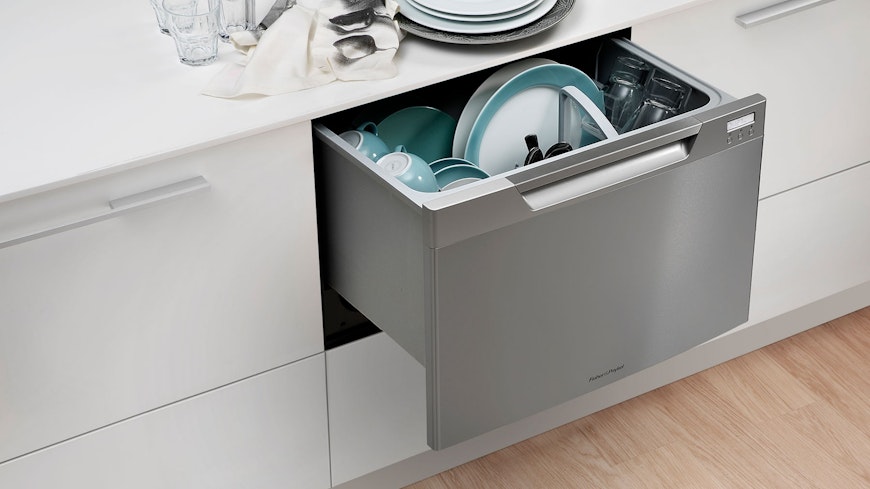
What is a DishDrawer?
Instead of having a hinged front door, a DishDrawer has one or more drawers that slide out of the main cavity. You can buy single or double DishDrawers, depending on your capacity requirements.
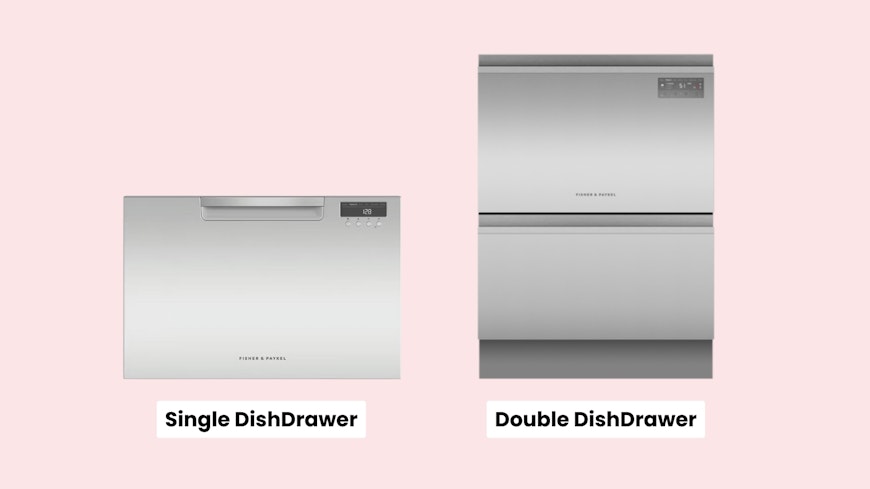
Pros of a DishDrawer
Single-drawer units are great for small households that wouldn’t often fill a full-size standard dishwasher.
They are easier to load and unload.
They look sleek and integrate well into a kitchen.
Double units are good for larger households as one drawer can be washing whilst the other accumulates dirty dishes.
Double units also allow different programmes in each drawer. For example, heavily soiled pans that need intense cleaning can go in one drawer and lighter soiled items in another.
Running smaller loads is more energy and water efficient.
Cons of a DishDrawer
They are more expensive to buy, especially double-drawer models.
They can make it tricky to stack dishes efficiently.
Larger pans might not always fit in.
DishDrawers don’t have a cutlery tray option.
They have slightly less capacity than standard dishwashers. Double units usually fit 14 place settings, whereas standard dishwashers can usually fit 15 or more.
They are perceived as being less reliable (read on).