By Chris Schulz
Investigative Journalist | Kaipūrongo Whakatewhatewha
Sport thrives when the entire country is allowed to get behind a team, an event, a champion, an occasion. Pay TV? That's just getting in the way.
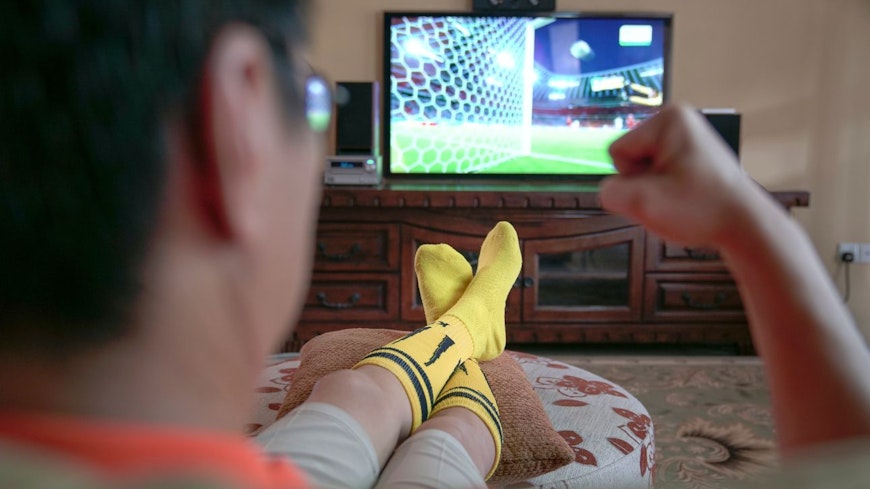
When the Black Ferns Sevens team beat Canada 19–12 to secure Aotearoa's first gold medal at the Paris Olympics in the early hours of Wednesday morning, New Zealand fans had several options to watch the game.
They could pay $35 to access live coverage through the pay TV supplier Sky TV.
They could brave the free-to-air coverage through Sky TV's free channel Sky Open, which offers sporadic highlights packages interspersed with advertising.
Or they could use a VPN, a process that hides a user’s IP address so another country’s free-to-air coverage can be accessed.
We’d highlighted these three ways to watch in an article published a week before the Paris Olympics kicked off.
About VPNs, we wrote: “Some people may prefer to watch foreign Olympic coverage … however, using a VPN to skirt regional licensing is a legal grey area.”
After publishing, we were asked by Sky TV not to mention this VPN option. Then we were warned by the legal departments of both the New Zealand and International Olympic Committees to remove any references to it or risk encouraging "copyright infringement".
But people seem to be finding out about it and doing it anyway.
How we used to watch live sport
Growing up in the 1980s, I have fantastic memories of getting up early, staying up late, and sometimes even skipping school to watch major sporting occasions.
I yelled at All Blacks like Zinzan Brooke and Sean Fitzpatrick to score more tries during intense test matches against Australia and South Africa.
I screamed at Rod Latham and Ken Rutherford to hit more sixes during the Young Guns-era of the New Zealand cricket team.
And when the Olympic Games came around every 4 years, my entire family and I would watch Danyon Loader, Sarah Ulmer and Beatrice Faumuina as they swam, cycled and threw their way to multiple gold medal wins.
Up until 1990, Sky TV didn't exist. If it did, we wouldn't have been able to afford it anyway.
All anyone had was free-to-air TV, and all you needed to be part of the action was a television set with an aerial bolted onto the roof.
Aside from annual TV license fee, no one had to pay a thing to see any of it.
How we watch live sport now
Things have changed since then.
If you're an All Blacks fan, the only way to see live international rugby games is to pay for a ticket or purchase a Sky Sport subscription.
If you're a Warriors fan, it's the same deal for rugby league.
Right now, TVNZ and TVNZ+ offers Black Caps coverage, but those rights will be renegotiated at the end of the 2025–26 season and could easily be snapped up by a pay TV organisation again.
Then there's the current Paris Olympics 2024. Anyone who can afford a Sky Sport subscription has access to 12 channels of live coverage, as well as on-demand highlights packages, recaps and replays.
A $35 package is available for those who only want Sky TV for the duration of the Olympics.
Those who can’t afford that package have a free option: one channel, called Sky Open, playing Olympics highlights packages with ads.
Those using this to watch the Olympics don’t seem too happy with the situation. One viewer we spoke to described the network’s coverage as “dumb,” “schizophrenic” and said it made them anxious.
A recent NZ Herald Facebook thread was full of users complaining about the amount of advertising being played during Sky’s coverage.
At the last Olympics, hosted in Tokyo and delayed by a year because of Covid until 2021, Sky also had screening rights, but it shared those with TVNZ, which hosted 12 hours a day of live coverage on its free-to-air channels, and through its on-demand streaming service TVNZ+.
No one had to pay to see any of it.
For the current Olympics, things are very different.
How those rights are protected
Sky CEO Sophie Moloney recently told NZ Herald the Olympic streaming rights were negotiated 10 years ago, and it was unlikely to turn a profit from them.
But selling the rights to major sporting events is a way for sporting bodies to generate income they wouldn’t otherwise have access to.
Big contracts are at stake, and a lot of money changes hands.
Stakeholders are going to great lengths to protect those interests.
After writing about the three Olympic viewing options, we received an email from Sky TV asking us to remove any mention of VPNs.
It said: “Sky makes a significant financial investment in these rights – and it is only through this investment that New Zealanders have any legitimate access within this country … We are committed to making the Games accessible to all New Zealanders – so it’s extremely disappointing to see you recommending a VPN option.”
While we changed our wording so that there was no suggestion we were recommending the use of VPNs, we refused to remove our reference to VPNs altogether, advising it is common practice for fans to access content using a VPN. Given it’s actually happening, why wouldn’t we report on it?
Then we received letters from both the New Zealand Olympic Committee (NZOC) and the International Olympic Committee (IOC) informing us we were encouraging copyright infringement. They also requested we remove any refences to VPNs.
The IOC letter said: “A consumer in New Zealand that circumvents a geographical restriction and accesses the Olympic Games … is engaging in a restricted act … thereby contravening the Copyright Act … In addition to breaching New Zealand copyright laws, consumers are also likely to be in breach of the terms and conditions in place … with their VPN provider.”
In response, we tweaked our wording again to include the IOC’s advice that viewers risked breaching the Copyright Act and the terms and conditions of VPN providers and overseas broadcasters, but we refused to remove references to VPNs. New Zealanders need to understand the implications of using VPNs to watch the Olympics.
What could happen if sport was free for everyone
Good things happen when sport is free for all to see.
When the Women’s Football World Cup was held across Australia and New Zealand in 2023, the number of female players reportedly increased 25% across Aotearoa.
Yet only 26 of the tournament’s 64 games were available free-to-air, through the news website Stuff, and via Prime, a Sky channel that no longer exists.
NZ Rugby predicted a 40% rise in female participants of rugby following the success of the Women's 2022 Rugby World Cup.
Yet only eight games from that tournament were screened live via Three.
Imagine what might have happened had even more people – those who couldn’t afford to do so – had been able to watch those tournaments unfold.
How many future All Blacks aren’t taking up the game because they can’t watch it live on TV?
How many future league players aren’t falling in love with today’s Warriors stars because they can’t access the games?
Even more important is the Olympics, an event that puts Aotearoa on the world stage and captures the nation’s imagination.
How many future rowers, swimmers, cyclists, divers, runners and discus throwers aren’t taking up the sport because they can’t access live Olympics coverage and experience the same thrill I felt as a kid yelling at my television?
If sporting codes didn’t rely on income from TV rights and were properly funded by the government, they wouldn’t have to rely on restricting broadcast access to the privileged few.
If that changed, then, and only then, would live sport truly be free for all again.