By James le Page
Former Product Test Team Leader | Kaiārahi Kapa Whakamātau Hautaonga
We were recently sent a Suunto Run to put through its paces here at Consumer NZ. We decided to trial it with two staffers. One’s a casual lunchtime runner and current Apple Watch Series 8 owner. The other is a more experienced trail runner and sports a Garmin Venu Sq.
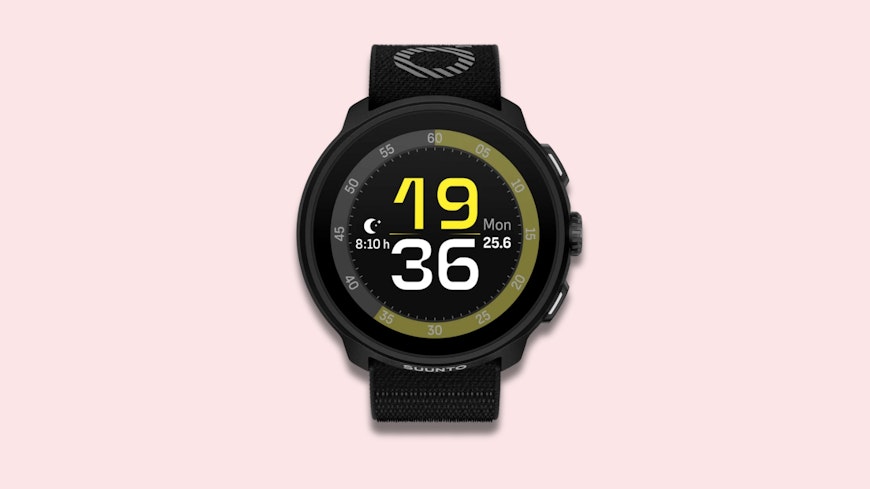
We trialled them at the same time as our own watches, that is, we wore one on each wrist. The aim was to see if it’s worth recommending shifting to the Suunto when you’re next in the market for a smartwatch.
Lightweight and comfortable
Large, bright display
Loads of fitness tracking data to unpack in the app
Can replay your activity on a rotating 3D map
Reasonably good battery life
Can store music and pair with headphones.
Unreliable heart rate tracking
‘Raise to wake’ screen sometimes hard to activate
Doesn’t automatically ask to start workouts, like the Apple Watch does
Learning curve in using all the features.
Amy – the Garmin-wearing trail runner
I’m a keen trail runner, entering events up to 30km long when I’m not injured. I have a Garmin Venu Sq, which I’ve been wearing for over 3 years – mostly to track my runs and gym workouts and monitor my fitness progress.
I’d bought the Venu Sq because, at the time, it had the best score in our smartwatches & fitness trackers test.
In particular, it received top marks for fitness tracking (100% for GPS accuracy and 90% for heart rate tracking). I also snaffled it for half price – it usually went for $370.
I love my Garmin, but I was very keen to try the Suunto Run. I knew the brand had been around for a long time and is respected for its precise navigation equipment.
I’ve put the Suunto through its paces over the past few weeks and found it to be a solid bit of kit. It’s super lightweight and comfy, with a strap that stays put – no flapping ends or slipping when sweaty. Set-up was a breeze, and it has a decent-sized circular AMOLED (active-matrix organic light-emitting diode) screen that’s bright and colourful. This means you don’t have to squint to read your stats mid-run.
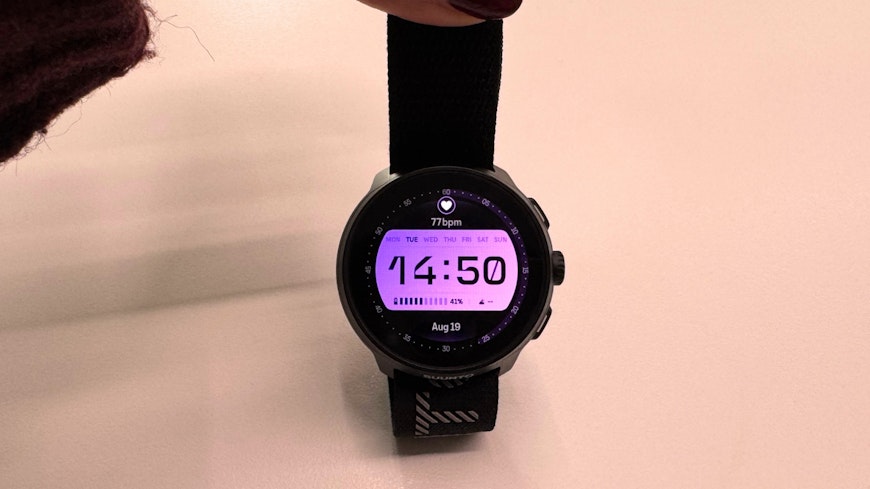
GPS connects quickly and is fairly accurate. However, it consistently records shorter distances than my Garmin, which has been spot on for the measured races I’ve done. On my regular 8km route, the Suunto was always about 260m short. That might matter to those keen to record their first 10km or half marathon.
The Suunto’s battery life is reasonable. I got 4½ days out of it in performance mode, with notifications off and screen brightness set to high. That’s nearly double what my old Venu Sq managed under the same conditions.
One of my favourite features is the combo of buttons and touch-screen controls. There are three buttons – a crown (which is both a button and a dial) plus upper and lower buttons. I’m a fan of button controls, especially when it’s wet. My Garmin’s touchscreen is hopeless in the rain.
You can also lock the screen and buttons during an activity, which is awesome. I’ve accidentally paused and ended a recording mid-run with my Garmin, which is a real pain.
The Suunto Run offers over 30 activity modes, and you can create your own via the app. You can pause recordings indefinitely – there are no annoying timeouts. And the watch will buzz your wrist and ask if you’d like to resume recording if you start moving again.
I also like that you can leave your phone at home, record your activity and sync later. The Suunto Run can also store 4GB of music and pair with your headphones so you can play directly from the watch.
Customisation is a strong point. You can choose from several watch faces and colours. And you can customise data fields, heart rate zones, button short cuts, plus screen brightness and timeout. You can also create interval workouts and routes to follow, plus set reminders, like when to take on hydration or fuel during an activity.
The Suunto is full of features. Its navigation options are particularly impressive for a watch that costs under $500. It can also monitor your sleep and estimate your blood oxygen level, calorie spend and how well you’ve recovered from workouts. And, it will count your steps.
It even has a metronome, so you can work on your running cadence. Plus, there’s a flashlight and find-my-phone feature. It has all the basics too, including alarms, a stopwatch and a timer.
But it’s not all good. One of the fundamental features of a running watch is heart rate tracking, and that feature needs to be accurate. Unfortunately, the Suunto Run’s heart rate monitor is a letdown. It’s slow to respond and can be way off – it’s worse than the $45 Kmart watch I trialled last year! And that’ll surely throw off its HRV (heart rate variability) and VO2 Max estimates too. For heart rate training, you’d need to pair the watch with a reliable chest or arm-based heart rate monitor.
I also found the raise-to-wake screen function unreliable while running. And there’s no way to crop activities after recording, as you can with my Garmin – say you forget to stop your activity before driving home.
Overall, the Suunto Run is a great sports watch for less than $500. But I’d happily forego some of its extra features in exchange for accurate heart rate readings and ultra-precise distance recordings.
James – the Apple Watch-wearing road shuffler
I’ve worn Apple Watches since about 2020. I like the ease of use, the fitness tracking and the ability to pay for things from my wrist. I also completed a ‘Couch to 5k’ last year, so my running and fitness level is now slightly above slug. If I go for a run without tracking things on my watch, I get quite upset as I like to nerd out on the unnecessary details.
There’s a bit of a learning curve with the Suunto compared with the easy Apple experience. There are plenty of customisation options for the wearer, but I only started uncovering them after a week or so with the watch. You really do need time to make the watch work for you in terms of look and feel. But it’s worth the effort as I ended up being very comfortable with things.
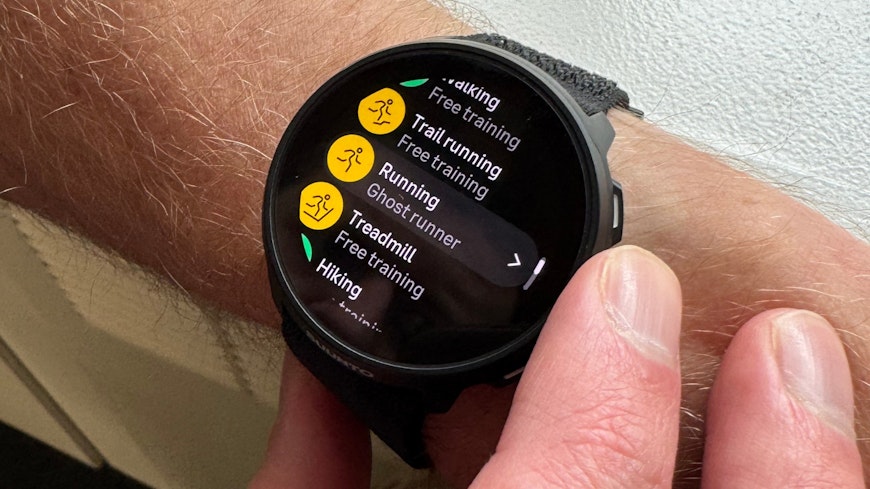
The Run is lightweight, and I barely noticed it was there. It all feels like it’s designed with fitness tracking at its core, and the additional smart features are secondary. This feeling permeated through to my user experience.
Eventually, I turned off any notifications coming through to the watch from my phone as I found that interface a bit clunky. However, the Suunto has become my preferred option for a fitness tracker.
I recorded both outdoor runs and treadmill exercises with the Suunto on one wrist and the Apple on the other. The results were comparable (in my mind) for a 5km outdoor run along Wellington’s waterfront on a sunny day, with a 30m distance discrepancy. The Suunto actually reckoned I ran the longer distance, so I’ll take that win. The Apple told me my heart rate averaged at 164bpm while Suunto gave 160bpm. The treadmill comparison yielded completely different results. The Suunto recorded my run as 3.01km in 23 minutes, while the Apple had 3.72km for the same time – both weren’t accurate compared with the treadmill measurement. It’s an extremely tough test for any fitness tracker, but the Apple was the winner here. For the kind of exercise I do, I don’t really care for extreme accuracy. I just like to record exercise as it gives me a sense of accomplishment.
Speaking of that sense, my favourite feature was the ability to replay my run on the Suunto app. It follows your route on a 3D map, slowly rotating as the little dot that’s you moves around the map. You can show all your friends your running prowess and even send them the clip to replay later.
The app is a data-filled paradise. There’s so much in the way of metrics being recorded or estimated, and it’s awesome. Would I ever use it all? Probably not. But I like it all being there. It boosts my bragging rights about my balanced average ground contact and 297ms ground contact time.
If my current Apple Watch broke today, and I needed to buy a new watch, I would happily pay $500 for the Suunto Run rather than the $749 Apple Watch Series 10. I’d miss being able to play with all the features on my watch, and I’d need to rewire my behaviour and divorce myself from the smart features I currently use, but I’d get over it for the fitness ‘nerding’ I could embrace. That’s coming from a staunch Apple convert, and that means something!
The watch was loaned to Consumer by Suunto.