By Rebecca Styles
Research Lead | Hautū Rangahau
Home insurance has been hitting the headlines in recent weeks. It’s getting increasingly expensive, and at least one insurer has paused issuing policies in two areas of the country.

Now the government is worried about insurance. Earlier this month it announced a review of house and contents insurance to understand why costs continue to rise.
We explain what the review means, whether it will bring down insurance bills, and what you can do about costs in the meantime.
What the government review will look at
Consumer NZ is pleased the government review will cover key aspects of the insurance sector. We recommended these areas should be reviewed in our 2025 report Will you be able to get home insurance by 2035?
Cabinet has instructed five government agencies to look into the availability, affordability and uptake of house and contents insurance in Aotearoa.
The first stage will take about 6 months and will look at:
whether the insurance market is competitive
the financial performance of insurers
what’s driving price rises.
The review will also look at other countries to see whether similar market conditions exist overseas.
The agencies reviewing the sector will report on their findings to the Minister of Finance and Minister of Commerce and Consumer Affairs in mid-2026.
The next steps after that will depend on what’s found in the initial stages of the review.
Knock-on impact for the natural hazards levy
Recently, concerns about the rising cost of insurance has put a halt to any increase in the natural hazards insurance levy.
The levy is coordinated by the Natural Hazards Commission Toka Tū Ake (NHC), formerly known as the Earthquake Commission (EQC).
The levy pays for the NHC scheme, which provides homeowners with a degree of insurance cover (called NHCover) for selected natural hazards, such as earthquakes. Homeowners pay the levy via their house insurance premiums.
If a claim is accepted, the scheme will cover the first $300,000 of damage to your house caused by a natural disaster. It also provides limited land cover in very specific circumstances.
A 2024 Treasury analysis has projected the scheme will be underfunded by 34% if the levy stays the same over the next 5 years. Consultation to decide whether the levy should go up, and if so, by how much was carried out in January and February 2025.
Yet, in November 2025, minister of finance Nicola Willis told reporters any decision about increasing the levy would be pushed out, citing cost-of-living concerns.
Now, decisions about the levy have been paused again until the review into insurance is completed.
Will the review bring prices down?
The short answer is that it’s too soon to tell.
The initial review will take 6 months, and if that leads into a full market study, it may take even longer.
While it may take some time, the review is critical to make sure insurance is available and affordable now and into the future. Insurance may be expensive now, if we do nothing, it will get even more so.
Consumer NZ research has shown that people are already dropping insurance cover, and this will only get worse without serious intervention.
If insurance becomes a luxury only available to a privileged few, the impacts on communities, our economy and society will be severe. We need a plan, and we need to start implementing that plan now.
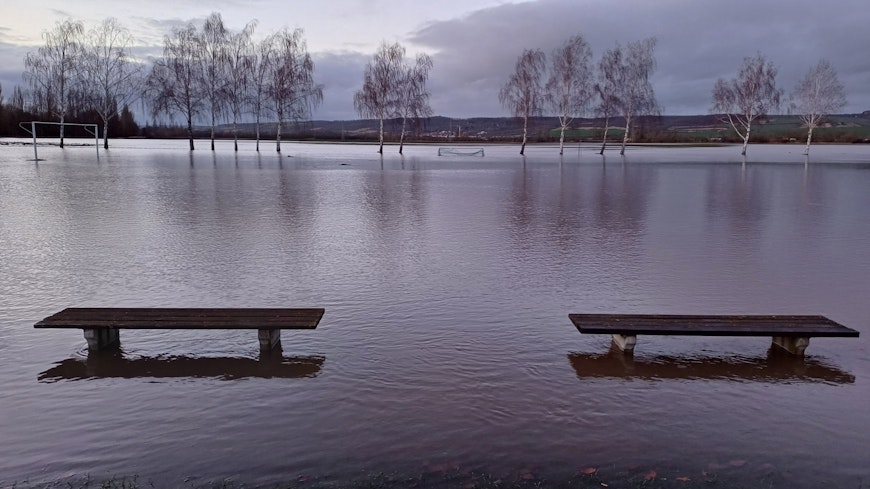
We also need an effective climate adaptation plan
Another thing that could help ensure insurance remains affordable and available in the future is effective climate adaptation legislation and a related framework.
In the latest Consumer NZ sentiment tracker data, 72% of respondents said Aotearoa should have a national plan to help communities adapt to climate change risks.
One factor driving escalating house and contents insurance costs is the increasing incidence of severe weather events, mainly flooding and landslides, because of climate change.
In response, insurers are moving towards risk-based pricing, meaning the more likely your home is to be impacted by severe weather events or natural hazards, the more likely you’ll have a bigger insurance bill.
Effective climate adaptation legislation and an associated framework would outline how climate change risks will be assessed, managed and paid for. They would also define the roles and responsibilities of central and local government, the insurance industry and property owners.
The minister for climate change, Simon Watts, released a National Adaptation Framework in October 2025.
While it’s a step in the right direction, it didn’t have a lot of detail, particularly around the biggest question of all – who will pay to help homeowners get out of harm’s way either before a disaster strikes, or after it, to ensure we don’t rebuild our homes in high-risk areas.
However, in cabinet papers about the framework, the government indicated that buy-outs after disasters may not be on the table.
In our latest survey, when asked who should pay for buying out a property if a home is no longer liveable after a natural disaster, 56% said it’s up to insurance companies, 50% said central government and 37% said local councils.
Just 13% said it was up to the individual homeowner (respondents could chose more than one option).
What can you do in the meantime to bring the cost of insurance down
We advise homeowners to get the best cover you can afford, and that suits the needs of your property. For instance, if you live on a flat section, the cover for replacing retaining walls won’t be as important for you.
Shopping around and switching is likely to be easier than you may think. Our 2025 insurance survey showed that of those who did switch insurer, 82% found it very easy.
To make it easier, you can compare the prices and policy details for nine insurance providers on our website.
Here are some other ways you can save.
Opt for a higher excess. Just don’t make it so high that you wouldn’t be able to afford it when you need to make a claim.
Chose a fire only or fire and burglary policy for your home. These policies will mean you’re not covered for everything, but you’ll keep some protection and, crucially, will still be entitled to NHCover formerly EQCover) in a natural disaster.
If you’re struggling to pay for your house insurance bill, you can apply to Work and Income, under the accommodation supplement, to help pay for costs. The application will include means testing and eligibility criteria, but you don’t need to be receiving a benefit already to apply for it.
There may also be benefits available from Work and Income under temporary additional support, although this application will be checked to see whether you are eligible for the accommodation supplement, too. To start the eligibility assessment process, get in touch with Work and Income on 0800 559 009.