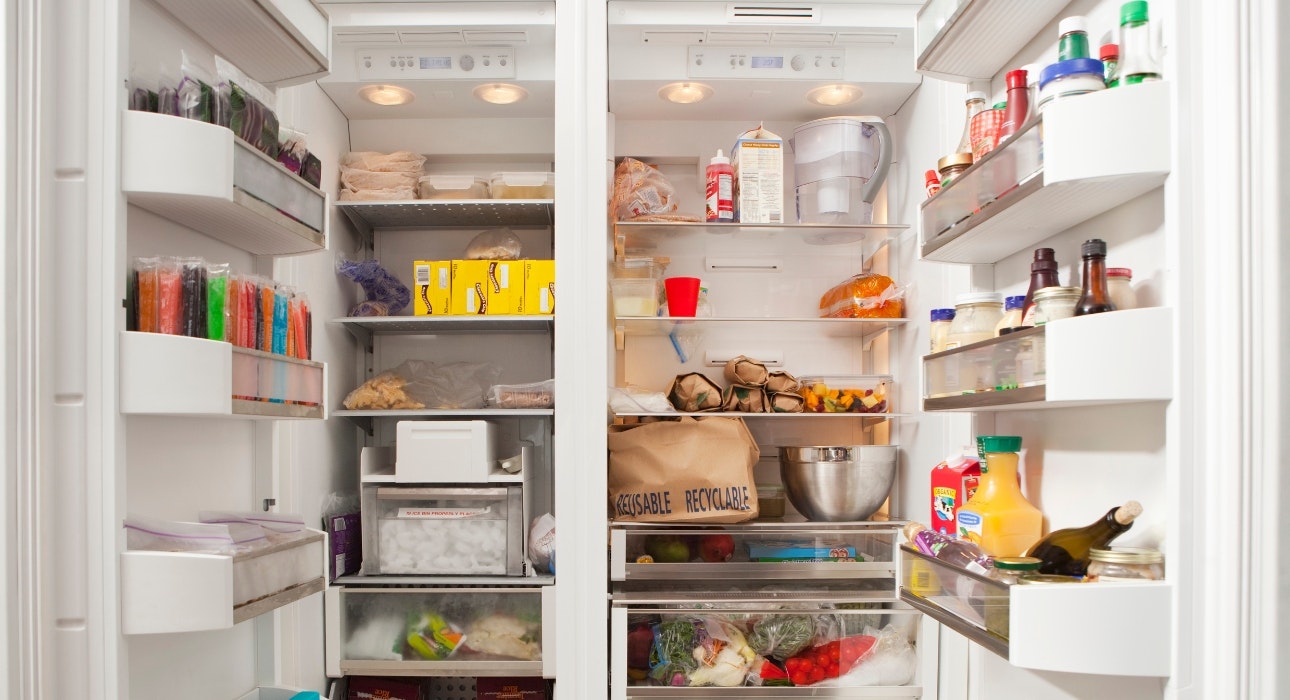
Picking a fridge isn’t easy. You need to choose a capacity, layout and finish. Different styles have freezers in different places, and what about the chilled water dispenser? From our independent testing of a variety of fridges, we’ve learned a few things to help you decide.
What size fridge will fit in your kitchen?
Your kitchen dimensions can limit your fridge options – especially if you have cabinetry designed around your existing whiteware.
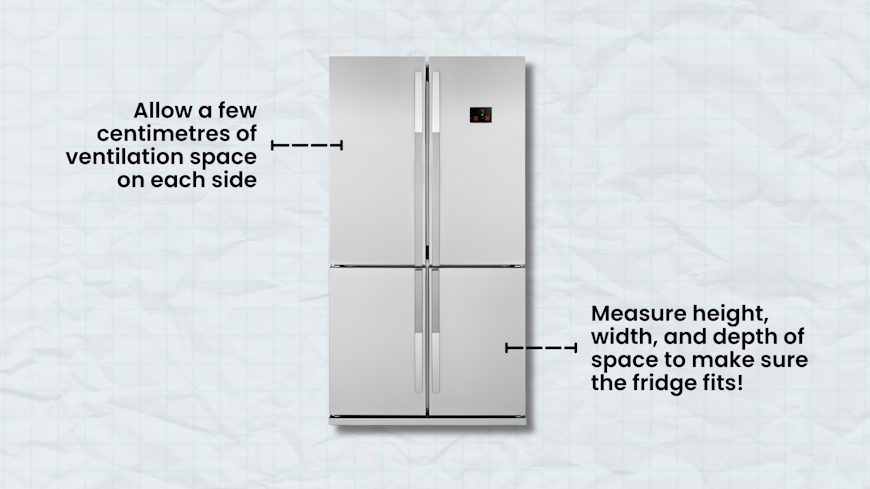
Before you start shopping, pull out the measuring tape and note down the height, width and depth of your space.
Make sure you allow for a few centimetres of ventilation space on each side. Some brands also recommend clearance of up to 30cm above the fridge, so check the exact requirements for the models you’re looking at.
If you’re buying a large fridge, make sure it’ll also fit through the door into your house.
Find the best fridge
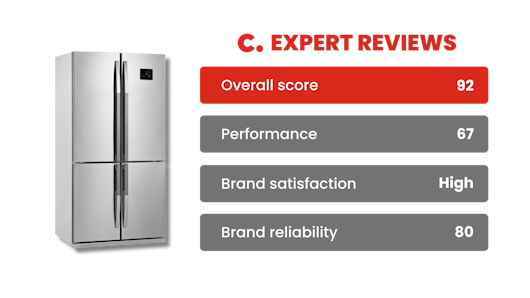
We've independently tested more than 80 models from 14 brands to help you avoid an expensive mistake.
How much capacity do you need?
Once you know the dimensions available, you need to figure out how much fridge space you want. Think about the bulky items you commonly buy – is there room for pizza boxes to lie flat? Will 3L milk bottles fit? What about whole watermelons?
We estimate a family of four doing a weekly shop will need 400L to 500L of total storage.
There are fridge-freezers as small as 200L, but most households will need something larger. In general, these don’t perform as well as the larger units in our reviews.
You can get French-door and side-by-side fridge-freezers with up to 700L of total capacity. Conventional stacked models top out at about 500L.
It’s false economy to keep your old fridge for extra storage. Older refrigerators are typically less energy efficient, and one new model with extra capacity will cost less to run than two smaller ones. If you must keep an old fridge, switch it on only when you need it, such as over the Christmas period.
Which freezer position is right for you?
Bottom-mounts vs top-mounts
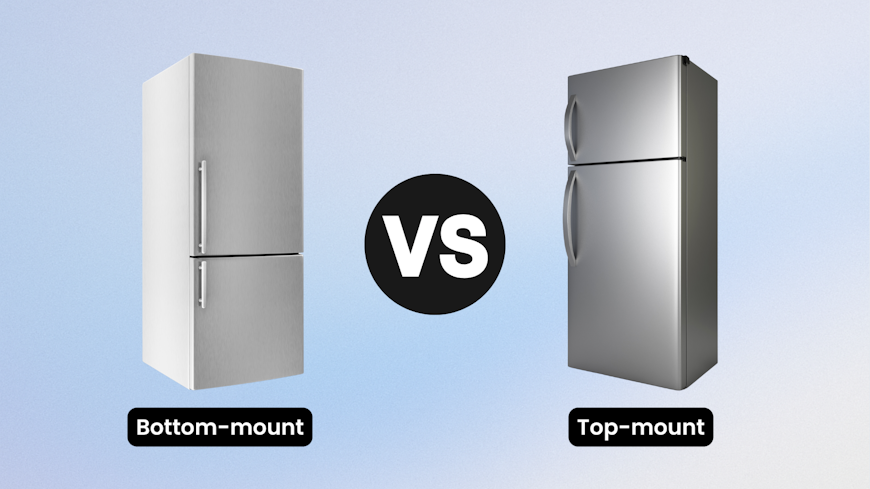
On most fridge-freezers, the freezer sits either above or below the fridge compartment. The right option for you depends on your mobility and height – you’ll probably use the fridge much more often than the freezer, so you want it to be in the most accessible position.
Top-mount fridge-freezers have the freezer on top. They tend to perform better overall, but they’re less convenient to use. As such, they’re becoming less common.
Bottom-mount fridge-freezers have the freezer on the bottom. This is the best option for most people, because the fridge is at eye level. For people who use wheelchairs, having the freezer at the bottom can make it easier to get food in and out of both compartments.
French-door models are also bottom-mounted.
But in some bottom-mount fridge-freezers, the crisper drawer may run too cold because it’s located right above the freezer.
Side-by-side fridge-freezers
Big side-by-side models are a lot more energy-efficient than they used to be, but they still tend to have less usable space than a vertically stacked fridge-freezer of the same size.
Because the fridge and freezer compartments are narrower, items can get pushed to the back and forgotten.
What features should you look for?
Fridge doors and shelves

Check which way the door opens and whether it will work in your space. Some models have reversible doors, so you can change the opening direction later.
Most fridges now have doors that close automatically, but it’s still a good idea to buy a model that sounds an alarm when a door has been open for too long.
A good range of shelf positions is important for customising your layout. Solid shelves are better than wire shelves, because they stop spills dripping through the fridge and are easier to wipe clean.
Crispers, chillers and multi-drawers

Crispers are humidity-controlled drawers inside the fridge. Vegetables stored in a crisper last longer and don’t need to be wrapped.
A chiller provides colder storage than the rest of the fridge, usually just above 0°C. It’s useful for cooling drinks or storing meat and fish.
A multi-drawer is a separate compartment, often between the fridge and freezer. Because it’s separate from the main fridge, humidity can be controlled more accurately than in a crisper, keeping produce fresh for longer. Some multi-drawers also have separate temperature controls, allowing you to store a wider range of foods or even use the compartment as a freezer.
For more on how to use these compartments, read our advice on how to organise your fridge.
Ice and water dispensers

An automatic through-the-door dispenser takes the hassle out of making ice cubes and chilling drinking water.
But it also reduces freezer space – usually by about 30%. Is the convenience worth having less room for food?
Some dispensers require plumbing, so remember to budget for installation. Others use a refillable water reservoir inside the fridge.
Smart connectivity

A smart fridge connects to the internet so you can control it remotely. You can monitor and change temperatures or get an alert if you’ve left the door open. Useful? Maybe not.
However, some Samsung smart fridges are a bit more advanced. Read more about whether you should buy a smart fridge.
White or stainless steel?
Whiteware isn’t just white anymore!
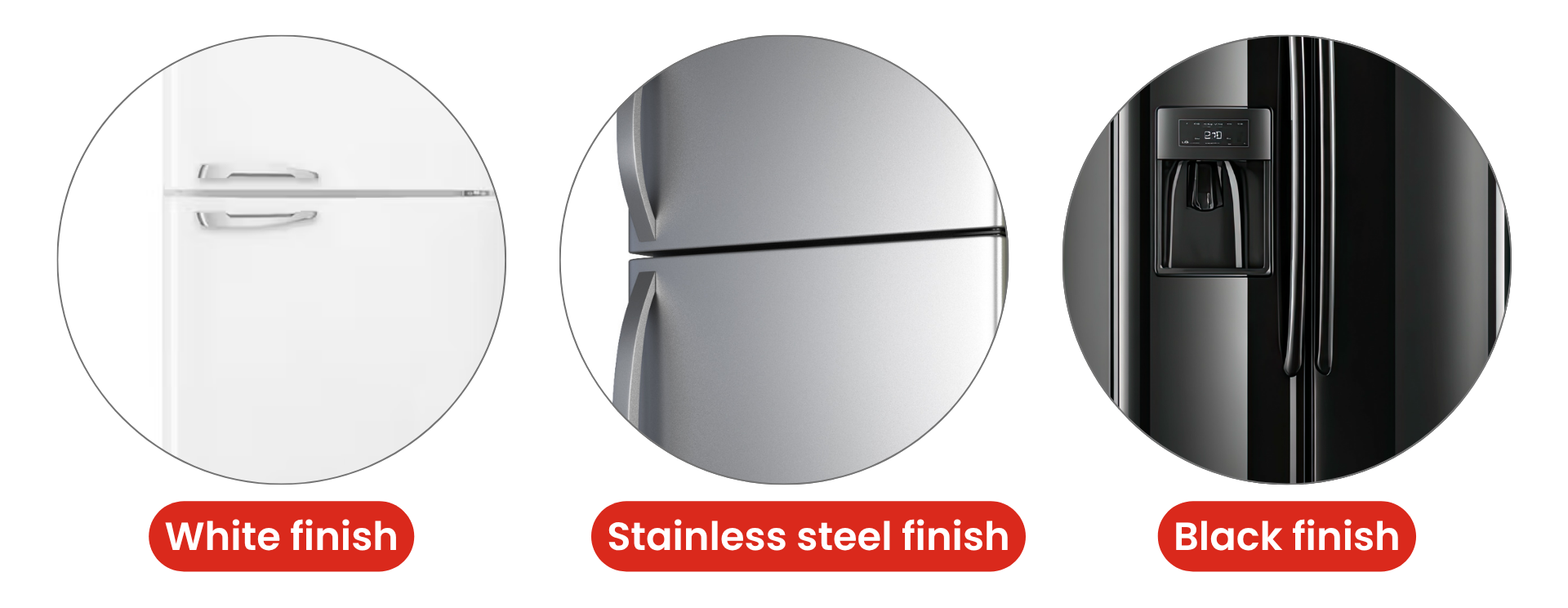
Stainless steel is prone to fingerprints and marks, so consider a matte or “fingerprint-resistant” stainless-steel finish if that’s likely to bother you. Black finishes are becoming more common too, but these models are usually more expensive.