The best heat pumps are efficient, quiet and affordable. We analysed the performance of virtually every heat pump on the market and developed a step-by-step guide to help you buy a heat pump for your home.
We also have tips on the most effective ways to use them.
Types of heat pump
Before you can choose a model, you need to think about where the main unit will sit and how you’ll circulate the conditioned air through your house.
Split system heat pumps
The simplest and most common option in New Zealand, split systems work best when located in the main living area of an open-plan home.
A split system has an exterior compressor unit connected to an interior ceiling or wall unit by copper refrigerant pipes and wiring.
The interior unit consists of electronic controls and a fan. It circulates air over finned tubing to either heat or cool it, depending on the settings.
Much of the installation cost for a split system comes from running the pipes and wires from outside to inside.
Multi-split heat pumps
In a multi-split system, the exterior unit connects to more than one interior unit (for example, one in the living space and another in a bedroom).
Multi-split systems are usually cheaper than having multiple external units for different parts of the house, but there may be extra installation costs from longer piping runs.
The interior units can have separate remotes – but it isn’t possible to have one interior unit cooling while another is heating.
Ducted heat pumps
Ducted systems feature a single, large-capacity interior unit mounted in the ceiling or under the floor. The conditioned air is pumped through insulated ducts to ceiling or floor outlets in several rooms in the house.
Ducted systems have the least visual impact of any heat pump system – just small flush vents in each room.
Because there’s some heat loss from the ducts, they are slightly less efficient than other systems. They’re also expensive to install.
Heat pumps vs heaters
Not sure whether you actually need a heat pump or whether a regular heater will do the job? Heat pumps are superior in nearly every way, but they do have some downsides.
Pros
Warm, dry and comfortable
Heat pumps can provide a level of all-round comfort not easily obtained using plug-in heaters. Their powerful, concentrated heat output can quickly bring a room up to temperature and then maintain it.
No gas charge
We don’t recommend installing gas heaters, even if you already pay a connection fee because you use gas for cooking or hot water. The price of natural gas is increasing rapidly, and buying a new appliance locks you into paying for gas for years to come.
Lower heating costs
If you switch from a heater to a heat pump and keep your home at the same temperature, you’ll save a considerable amount in heating costs. Some of our members who upgrade to heat pumps say they keep their homes warmer than before, so their power bills haven't dropped much – but that’s still a win, in our book.
Depending on usage, a very large heat pump (10kW or more) might cost $1,000 per year to keep you warm, while a small one (2.5kW) can cost below $200.
Dehumidifying
If you run the heat pump in “dry” mode, it will remove moisture from the air. Bear in mind, though, that if you have a purpose-built dehumidifier, it will be more effective to use that in conjunction with your heat pump run in “heating” mode.
Air filtering
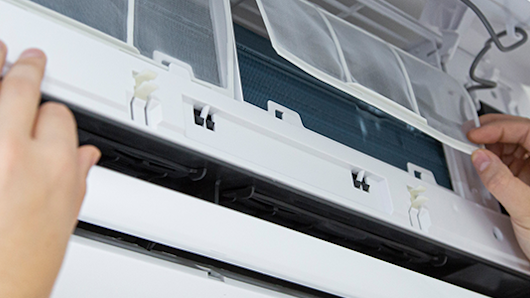
Most heat pumps include a washable filter unit that removes dust and particles from the air. This could be an important feature for people with asthma and allergies. The filters need regular cleaning to keep the unit working at maximum efficiency. Some have a deodorising function as well.
Cooling
A reverse-cycle heat pump is the only home-heating system that can both heat and cool a room. You might thank yourself for installing a heat pump once summer arrives.

Cons
Noise
Whirring fans can be annoying. Fans run in both the interior and exterior units whenever the heat pump is in operation. The inside unit should only produce a low hum once the room is up to temperature, but the outside unit can be quite noisy. Consider the impact on your neighbours if the outdoor unit must be mounted near your boundary.
Not so good in low temperatures
Extracting heat from outdoor air gets more difficult as the temperature drops. Sometimes, exterior heat pump units freeze up and need to spend a few minutes defrosting before they can work. If you live somewhere this is likely to be a regular problem, check our database for heat pumps with a better “low temp performance” score.
Draughts
Circulating air can cause draughts, which might affect where you place the unit. For example, don’t put it on the wall just above your favourite armchair – the breeze might make you feel chilly.
Internal unit position
High wall mounted heat pumps
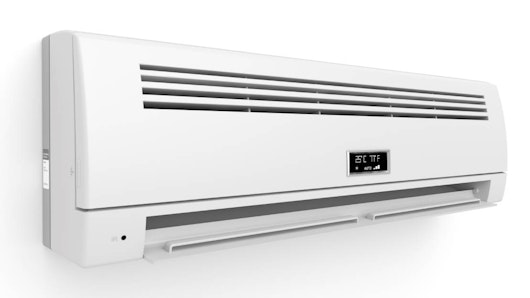
High-wall units are the most common type of heat pump in New Zealand. The units are usually long and thin, are mounted close to the ceiling, and circulate enough air to heat a room evenly.
The unit should be located so the airflow can reach as much of the room as possible, but not close to where you'd normally sit (so you don't have to put up with fan noise in your ear and draughts).
The location of high-wall units can make cleaning their filters difficult, particularly for the elderly and some people with disabilities. Some makers offer self-cleaning filter models to solve this problem.
Ceiling mounted heat pumps
These units either hang off or are fitted into the ceiling. They can be installed where wall space is at a premium, but they have the same filter changing drawbacks as high-wall units.
Low-wall or floor mounted heat pumps
These units sit on the floor, alongside a wall. They should be located where they can distribute warm air to as much of the house as possible, and you need to make sure your furniture doesn’t obstruct the airflow. Filter cleaning is a breeze.
Which position is best?
Some suppliers suggest that floor-mounted heat pumps give the best heating effectiveness, because hot air rises. This could be particularly important if you have high ceilings. However, other mounting positions generally work fine too. By the same token, high wall mount or ceiling mount heat pumps are best for cooling, because cold air falls.
Discuss mounting options with your supplier before you commit to anything.
How to choose a heat pump size
Heating capacity is the most important specification when you’re buying a heat pump. If you buy a cheap heat pump with a capacity that’s too low, it’ll struggle to warm the space. If it’s too high, it’ll be inefficient and cost more upfront than you need to spend.
Our table lets you estimate the capacity of heat pump you’ll need to maintain a comfortable temperature. The table assumes a standard ceiling height of 2.4m. If you have high ceilings, adjust the estimates up.
Heat pump cleaning and maintenance
Learn how to clean a heat pump filter with just a vacuum cleaner and a few minutes of your time.
Heat pump energy usage, efficiency and running costs
How much it costs to run a heat pump depends on how efficient it is at heating or cooling the air. Heating and cooling efficiencies are also a factor in calculating a heat pump’s energy ratings.
Heating efficiency is called COP (coefficient of performance). A good heat pump has a COP of 3 or more, meaning 1kW of energy produces 3kW of heat. Plug-in heaters all produce slightly less than 1kW of heat from 1kW of electricity, so a heat pump with a COP of 3 is three times more efficient than a standard heater.
Be aware, though, that because de-icing takes extra energy, a heat pump’s COP can be lower in near-zero temperatures.
Cooling efficiency is called EER (energy efficiency ratio). An EER of 3 or more indicates energy-efficient cooling.
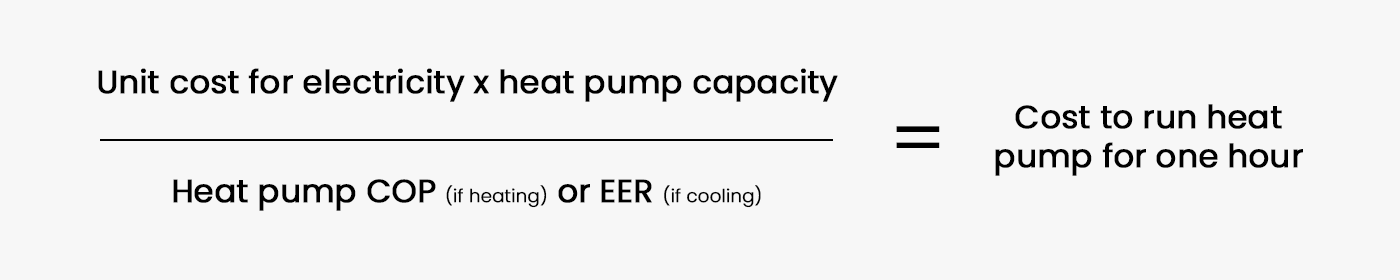
You can figure out your hourly heat pump cost using the formula below. Your electricity unit cost will be on your power bill and should be somewhere around 26c.
A smart heat pump is worth paying for
Nearly every heat pump on the market can be made “smart”, meaning it can connect to your local WiFi network. However, it’s usually an optional extra.
A heat pump with WiFi has no need for a remote, because you can control the unit from a phone or tablet (including advanced functions, like setting timers). For that reason, we think it’s worth going for WiFi when you buy your heat pump, as long as the upgrade doesn’t cost too much.
Is it more efficient to leave a heat pump on 24/7 or turn it on when required?
We answer your frequently asked questions, including about performance in cold weather.
Energy Rating Labels
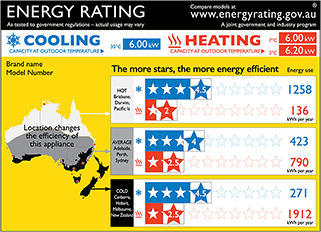
Example energy rating label
The Energy Rating Label has a scale of stars to show how energy efficient a model is, compared to other models of the same size/capacity.
More stars = more energy efficient.
The energy consumption figure is in kilowatt-hours (kWh) and you can use this figure and the cost (tariff) from your latest power bill to calculate how much this model will cost to run. The MBIE-reported national average cost of a kWh in New Zealand is 29¢.
Lower kWh = cheaper to run.
Heat pump annual energy consumption in kWh is based on a complex methodology which takes into account the heating load, capacity, and efficiency at different temperatures as well as climate data.
You should only compare star ratings of heat pumps with the same or similar capacities.
For information on energy ratings and how to use them, see our Zoned Energy Rating Label (ZERL): what you need to know article.