By Kylie Klein-Nixon
Digital Journalist | Kaipūrongo Matihiko
Move over, PayWave! Meet the latest magic trick, where your money disappears.
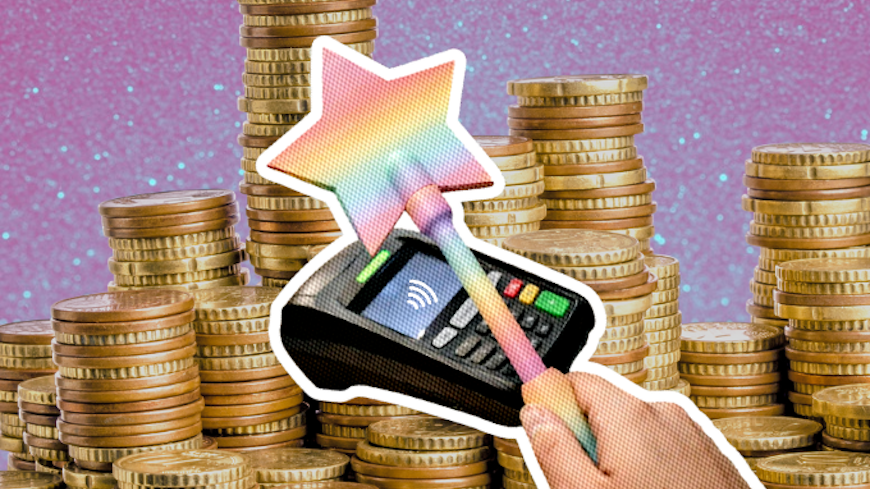
The TikTok clip opens with a woman pulling up to the drive-through window at a Starbucks. She orders, but when the kid at the counter holds the payment card reader out to her, she doesn’t reach for her purse.
Instead, as the bemused attendant looks on, she draws a big, rainbow-striped, star-tipped wand from her bag and taps the machine, paying for her drink.
Cha-ching! You’re a shopper, Harry!
No, it’s not the latest instalment of some urban fantasy TV show, it’s a “real” wand you can use wherever contactless payment is accepted. And they’re here in New Zealand.
Adding fun into the equation
Kiwi wand-maker Annie Eades, founder of 3D printing business The Etchery and Co, first saw the pay wand on social media about five months ago. She was immediately taken with the idea and designed her own “Magic Payment Wand”, which she now prints to order and sells online for $19.99 plus postage.
Kmart NZ is selling its version of the wands for $6 apiece, and a quick search online shows small retailers all over the world offering wands on sites like Etsy and Amazon.
Eades says her buyers are mostly adults, including parents buying them for their kids, who “want to make everyday life a bit more fun”.
“I think a lot of it is to do with social media. When people see others having fun with these things, they want to do it and enjoy it themselves.”
The trend appears to have taken off this year after US payments company Block released a limited run of contactless payment wands. They sold out within hours.
NZ’s best and worst loyalty programmes
We’ve surveyed 22 popular loyalty schemes to find out who offers the best value, and which ones aren’t worth signing up for.
Taking away the pain of paying
Dr Lachlan Schomburgk, lecturer in marketing (business analytics) at the University of Queensland’s Business School, says the playfulness of paying with a contactless wand could encourage people to spend more.
“Turning payment into a little magic trick could make spending feel more like entertainment and less like parting with your hard-earned money. This might take some of the sting out of paying, what researchers call the ‘pain of paying’, and potentially encourage impulse purchases.”
He has found people tend to spend slightly more with cashless payments, because tapping feels less tangible than handing over notes and coins.
“A magic wand might make spending even more enjoyable, but there's an interesting twist: the extra ritual could actually make us more conscious of paying.”
With the larger, 3D-printed wands, users insert a contactless card into the star-shaped top and screw the handle closed. As with any card holder, if you lose the wand with the card in it, you will lose the card too.
Eades says some people go through drive-throughs just to use the wand and get their social clips.
“At some point, you’ve paid, you’ve had a laugh, you’ve used it. You probably won’t use it as often as you did at the start. It’s a novelty.”
From supermarket collectibles to loyalty rewards, retailers have long tried to make shopping feel like a game. Consumer’s Ooshies debate explored both sides of this topic.